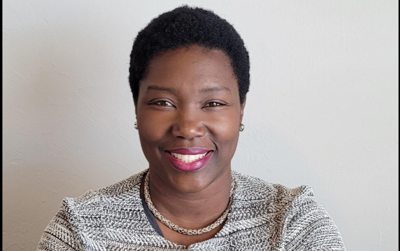

The National Park Service has named an OU faculty member as its new director for an extension of the Black Homesteader Project project in Oklahoma after partnering with the University of Nebraska’s Center for Great Plains Studies and OU.
Kalenda Eaton, an associate professor in OU’s Clara Luper Department of African American studies, will supervise the overall project, train students working on the project, create an advisory board, conduct research and more.
Homesteaders come from the Homestead Act of 1862, which gave any U.S. citizen over the age of 21 who had not fought against the U.S. the right to claim up to 160 acres of land under the stipulation that the person or family would live there, improve the area and pay a small fee. Over 270 million acres of land were given to U.S. citizens before the act was repealed in 1976, and African Americans obtained almost 650,000 of those acres.
Eaton wrote in an email the main goals of the Black Homesteader Project are to research, document, preserve, highlight and create an archive of Black migration and community building in the American West. She will primarily focus on the Great Plains region toward the end of the 19th century and the beginning of the 20th century.
Eaton was born and raised in northern California in the San Francisco Bay Area but developed an interest in regional Western Black history when she was a college student in Louisiana in the mid-'90s. She wrote that interests in Black Western studies stem from her birth and heritage places, with her maternal side of the family living mostly in Texas, Oklahoma and California.
Eaton wrote that she began analyzing how Black Western identity was reimagined in literature and pop culture during her graduate school years. Since graduate school, a majority of Eaton’s writing and teachings have been centered around Oklahoma history.
Eaton wrote she is excited about the project, and her team is planning to hire a postdoctoral scholar to conduct research and both undergraduate and graduate students to assist in data collection and oral histories. The hiring process for researchers will begin this fall and continue from there, based on the project’s needs.
Eaton wrote she hopes this research and the team’s findings will spark conversations in communities that may not typically divulge topics about Black experiences.
“I predict that for those not accustomed to thinking about (the) Black experience here (in Oklahoma) outside of the occasional rodeo or massacre, this project will create complex and rich conversations about how the history of Oklahoma is also connected to the promises and ideals of Black freedom,” Eaton wrote.
The National Endowment for the Humanities, the 400 Years of African American History, African American Cultural Heritage Action Fund-National Trust for Historic Preservation and the National Park Service have all donated to the larger project. The project has been active for about ten years, but its grant funding will provide longevity to put more years of research into the project being that this is the first year Oklahoma is included in the larger project.
“Overall, I was drawn to this project because many narratives and histories about Black Oklahomans still exist within families, federal documents and in communities … but little attention has been paid to this material,” Eaton wrote. “Therefore, I am excited about the opportunity to provide a central platform for these early experiences — particularly, as they relate to the realities of the present day.”
Editor's note: This article was updated at 5:30 p.m. August 9 to properly reflect Kalenda Eaton's position in the Black Homesteader Project as director of Oklahoma research.


