The Cleveland County Health Department has violated the Oklahoma Open Records Act, according to state and federal Freedom of Information experts.
Health department officials waited for approval from the department’s attorneys before giving The Daily requested health code violation records, which violates Oklahoma’s Open Records Act section 24 A.5. As well, The Daily was not permitted to electronically reproduce hard copies of the health inspection reports, which violates the opinion of former Oklahoma Attorney General Drew Edmondson.
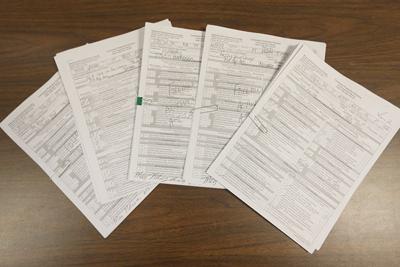
The Daily eventually acquired the records after paying $53 for 212 pages used for a follow-up article about health code violations found in Campus Corner establishments.
Joey Senat, an Oklahoma State University journalism professor and former Freedom of Information Oklahoma president, said in these instances the Cleveland County Health Department is violating the original intent of the Oklahoma Open Records Act.
Freedom of Information Oklahoma is a statewide organization actively supporting individuals and organizations working to acquire open records and provide access to open meetings.
INSPECTION REPORTS
When The Daily requested to make its own electronic copies of the inspection reports, Katherine Cintron, administrative technician for the Cleveland County Health Department wrote in an email dated Aug. 15: “I’m afraid not. Current policy states that the procedure we followed this time is the procedure that must each time.”
Inspection reports are kept in an electronic database, said Keith Reed, regional director of Cleveland and McClain County Health Departments. The reports are entered into the database, which can be publicly accessed through the department's website. The database does not include scanned copies of the inspection report, nor is it standard practice for the department to scan the inspection reports electronically.
The department’s policy is to decline requests for inspection reports to be reproduced electronically, Reed said.
“It is much quicker, and therefore less strain on staff time, for us to reproduce paper copies from paper copies,” Reed said.
Oklahoma’s Open Records Act section 24 A.5 statute cites, “All records of public bodies and public officials shall be open to any person for inspection, copying, or mechanical reproduction during regular business hours.”
Senat cited a previous ruling, saying, “Nowhere in the act does the law prohibit requesters of records from making copies of such records themselves, nor does it require that copies of the requested documents be made by an employee of a public body.”
Agencies have previously tried to block people from making their own copies because the agencies are trying to make money from the requests, said Frank LoMonte, executive director of the Student Press Law Center, in a phone interview.
“The law says that you have the right to inspect them, and if during the process of inspecting them you have a device in your hand that can make copies, then you’re not causing any harm,” LoMonte said.
Reed eventually wrote in an Aug. 15 email The Daily could bring its own equipment to reproduce future inspection reports electronically “as long as it does not disrupt our business operations.”
DEPARTMENT PROTOCOL
Katherine Cintron, administrative technician for the Cleveland County Health Department in emails dated Aug. 13 and 15, 2014 wrote: “We found out late yesterday afternoon that there is a new requirement that requests be approved by legal — a formality, but still a requirement.”
The department’s procedures of asking an attorney to approve record requests appears to violate the Open Records Act, Senat said.
Senat cited an opinion from Edmondson, stating state agencies “may not make rules, policy or procedures that conflict with the Open Records Act.”
The public is entitled to walk in, request records and receive them without approval by an agency attorney, Senat said.
Senat cited a 2005 police training video, where Edmondson said people working in public bodies should have a working familiarity with the Open Records Act and be able to respond to citizen inquiries for records.
“And that would mean in most instances, if not all instances, they should not have to ask someone else for permission or authority,” Edmondson said at the training.
Reed defended the department’s protocols for handling open record requests.
“The process for running requests through our legal division is not intended for legal review and approval, although an unusual request might necessitate a legal opinion. It is simply that we track all requests to ensure full compliance,” Reed said.
“The misunderstanding regarding the nature of OSDH’s legal involvement is my fault. I was simply reminding staff that we had to go through legal, and that was taken to mean for ‘approval’ instead of to log it in and assign a tracking number,” Reed said.
Reed declined to answer to whether citizens could copy the most recent report for a particular restaurant immediately on site.
Reed also declined to answer whether the department would provide a refund of $53 for declining The Daily to reproduce inspection reports on-site electronically.
For more information on Oklahoma’s Open Records Act visit Freedom of Information Oklahoma at www.foioklahoma.org or follow on Twitter @FOIOklahoma.


