
This story tracks new hazing violations among various OU organizations. Over the past two years, ⅓ of OU’s Interfraternity Council has been found responsible for hazing violations.
Under the Stop Campus Hazing Act, OU is mandated by law to report investigations of hazing, which are found on its Stop Campus Hazing Act reports page.
The Stop Campus Hazing Act became public law in December 2024 and requires all institutions of higher education participating in federal student aid programs to report hazing incidents in its annual security and fire safety reports.
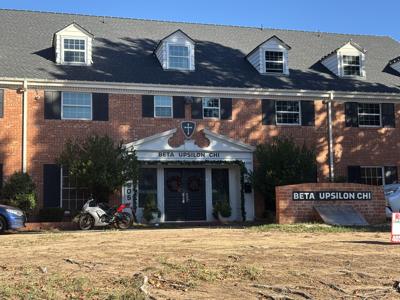
Beta Upsilon Chi
Incident date: August-October 2026
Reported: Sept. 23, 2026
Beta Upsilon Chi was found responsible for hazing and hazing with physical harm, according to a report by the university that concluded on Nov. 4.
The report states an investigation into the fraternity found multiple acts of hazing in the fall 2026 new member process that violated university policy.
The university discovered Beta Upsilon Chi used “Family Points,” a structured points system for new members consisting of various food and soda consumption challenges, sport challenges and personal servitude for active members.
It also found the fraternity played “Blackout Bingo,” which involved acts of servitude and competition solely for new members’ participation.
The university also found the fraternity held an event called “Family Tradition,” in which a subgroup of new members was encouraged to answer questions about their assigned “bigs,” and were given consequences if the questions were answered incorrectly. Consequences included chugging soda and running while being monitored by other members in the assigned “family.”
As a result of the investigation, the university imposed:
• Hazing Education Workshop
• Revised New Member Education Plan
• Leadership Accountability Meeting
• Disciplinary Probation
Sigma Nu
Incident date: August-October 2026
Reported: Sept. 21, 2026
Sigma Nu was found responsible for hazing, according to a report by the university released Oct. 14.
According to the Stop Hazing Act reports page, the university’s investigation found that the fraternity used “BASICS,” a structured system of personal servitude and coerced domestic labor for members.
The university imposed four sanctions as a result of the report:
• Disciplinary probation
• Officer transition meeting
• Hazing education workshop
• Revised new member education plan
In a written response sent to OU Daily, the Sigma Nu chapter adviser disputed the university’s report findings. The chapter adviser asserted that it’s improper for a public institution like the university to “arbitrarily define” conduct as hazing which does not fit the definition of hazing.
“The factual findings made by the Office of Student Conduct for the University of Oklahoma in its ‘Statement of Findings’ regarding the ‘BASICS’ program at AE Chapter of the Sigma Nu Fraternity do not constitute hazing under either federal of state law. It is not even close,” the statement reads.
The adviser wrote that although they disputed the claims, the fraternity does not intend to contest the decision by way of appeal. The fraternity also wrote that it is working to remove the BASICS program completely from its new member education program.
Pi Kappa Alpha
Incident date: August-September 2026
Reported: Aug. 29, Aug. 31, 2026
Pi Kappa Alpha was found responsible for hazing involving physical harm and hazing involving degrading behavior, according to a report by the university released Sept. 16.
According to the Stop Hazing Act reports page, the fraternity deviated from its new member education by incorporating physical exercises into new member activities and requiring new members to be at the chapter house when not in class.
As a result of the report, the university imposed four sanctions:
• Disciplinary probation
• Hazing education workshop
• Revised new member education plan
• Accountability meeting
2025-2026
Sigma Phi Epsilon
Incident date: Fall 2025 semester, Dec. 2, 2025
Reported: Dec. 14, 2025
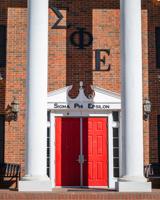
Sigma Phi Epsilon was found responsible for hazing involving physical harm and degrading behavior, as well as violation of the university's Alcohol Policy, according to a hazing report by the university.
In the spring, OU’s chapter of Sigma Phi Epsilon was initially closed due to the discovery of intensive hazing in late fall, according to a hazing report. The chapter was later reinstated by the national Board of Directors of Sigma Phi Epsilon and is currently active on OU’s campus.
On December 2, Sigma Phi Epsilon staff discovered hazing activity in the basement of the chapter facility, according to the report. This occurred during “Senior Night” of “Hell Week,” an intensive week of hazing.
During the investigation, it was discovered that additional hazing activities occurred during the fall 2025 semester and before, the report reads.
According to the report, hazing behaviors included:
• “Lineups” where members were required to perform physical workouts while reciting fraternity chapter history
• A structured system known as “views” where pledges served as personal servants and performed “coerced” domestic labor for active members
• Assignments where members imposed roles and menial tasks on pledging members
• Substance harassment where food waste and other liquids were applied onto new members
Sigma Phi Epsilon faced four OU Student Rights and Responsibilities Code charges, including a violation of the university’s alcohol policy, hazing, hazing with physical harm and hazing with degrading behavior. The fraternity was found responsible for all hazing violations except the university’s alcohol policy.
As a result of the report, the university imposed six sanctions:
• Disciplinary probation
• Hazing education workshop
• National Hazing Prevention Week event sponsorship
• Operational improvement plan, including a revised new member education plan
• Limited social probation
• Alumni Advisory Council oversight for all chapter activities
On June 3, OU Daily reported the chapter had been reinstated after the chapter announced its rush chairs for the upcoming fall semester.
Ben Ford, marketing and communications director for the national Sigma Phi Epsilon fraternity, wrote in a statement to the Daily that the National Board of Directors of Sigma Phi Epsilon had approved the OU chapter’s appeal for reinstatement and “is launching a comprehensive effort to build the best chapter at OU.”

Phi Delta Theta
Incident date: Fall 2025 semester
Reported: Sept. 20, 2025
Phi Delta Theta was found responsible for hazing including physical harm, hazing including degrading behavior, a violation of the university’s alcohol policy and drug use.
Hazing incidents are noted to have taken place over the course of the fall 2025 semester, including verbal degradation, physical overexertion, task assignments and illegal alcohol consumption.
According to prior OU Daily reporting, hazing consisted of pledge assignments in which new members were required to perform various tasks, such as giving weather reports or delivering food. The reports state new member educators picked assignments from a list used year-to-year as a tradition within the fraternity.
New members were also asked to complete scavenger hunts, which included visiting Oklahoma State University’s Phi Delta Theta chapter.
Pledge class members were required to carry “pledge packs,” which held assorted nicotine and tobacco products, condoms, games such as dice and cards, ping pong balls, a blue journal, blue pens and three matches. Failure to meet the fraternity’s expectations resulted in punishment by physical exercise, according to the reports.
The report states the fraternity held a “Hell Night” on Sept. 24, 2025, and prior OU Daily reporting found that new members were called to the house to be blindfolded and marched into the chapter room for various activities, including dancing, rapping, exercising, “trust falling” and illegal alcohol consumption.
The report states that one individual had alcohol taped to their hands and was encouraged to overindulge, leading to the member’s hospitalization caused by alcohol poisoning.
The university imposed seven sanctions:
• Alcohol Strike 2 sanctions
• Disciplinary probation
• Hazing and drug education workshop(s)
• National Hazing Prevention Week event sponsorship
• Revised new member education plan
• Limited social probation
• Adviser supervision for all new member events
Kappa Sigma
Incident date: Fall 2025 semester
Reported: Sept. 24, 2025
Kappa Sigma was found responsible for hazing involving physical harm and degrading behavior, violating the university’s alcohol policy and providing alcohol to individual(s) under the age of 21.
The general description of hazing incidents show that new members were expected to be at the chapter facility when not in class and to complete “acts of servitude” for active members including cleaning members’ houses, doing laundry, providing rides and food using their student meal plans and other means.
Hazing included drinking games, interviewing active members, physical exercise with occasional blindfolding, illegal alcohol consumption, consumption of food such as raw onions and off-campus hazing.
The report states that as punishment for not completing a certain number of interviews or not spending enough time at the chapter’s facility, new members would be broken into small groups and sent to the off-campus residence of an older member, referred to as a “previous pledge master.” Members were required to complete various exercises and consume a drink made by the pledge master.
This activity resulted in the hospitalization of a pledge member following an allergic reaction of a drink, according to the reports.
As a result of the report, the university imposed eight sanctions:
• Alcohol Strike 2 sanctions
• Disciplinary probation
• Hazing education workshop
• National Hazing Prevention Week event sponsorship
• Revised new member education plan
• Limited social probation
• Contract review for alcohol vendors and additional event registration requirements for event(s) with alcohol
• Adviser supervision for all chapter activities
OU Hockey Club
Incident date: 2024-2025 hockey season
Reported: July 4, 2025
OU Hockey Club was found responsible for hazing including physical harm, university policy violations, violating alcohol law or university policy, endangering intoxication and complicity, according to the university’s report.
According to the university’s report, the investigation found a series of hazing activities directed at rookie players by older members and alumni. Some practices included coerced performances such as the “Rookie Idol” mandate, in which new players were forced to perform pre-selected songs in various public settings.
The university also found the club held an off-campus “Rookie Party” in which veteran players facilitated drinking games.
As a result of the investigation, the university imposed five sanctions:
• Alcohol Strike 1 sanctions
• Hazing education workshop
• National Hazing Prevention Week event sponsorship
• Creation of a risk management plan for off-ice activities
• Creation of event planning guide for event(s) with alcohol
This story was edited by Audrey McClour. Larkin Bock copy edited this story.


