

Lester Reed could have picked any fate for his body after death.
He could have chosen to be buried, a tradition dating as far back as the Stone Age. He could have gone with cremation, a practice growing in popularity in recent decades in the U.S. and beyond. He could have even picked a burial in tandem with a tree or had his ashes turned into a diamond.
Instead, Reed chose to donate his body to the OU College of Medicine. Months later, his son had lunch with the students who dissected him.
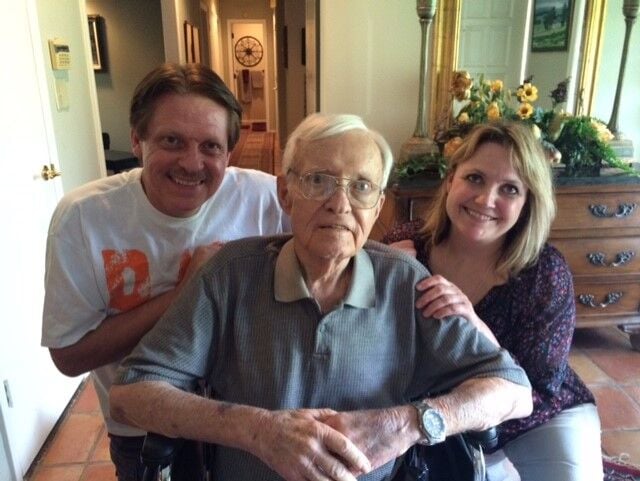
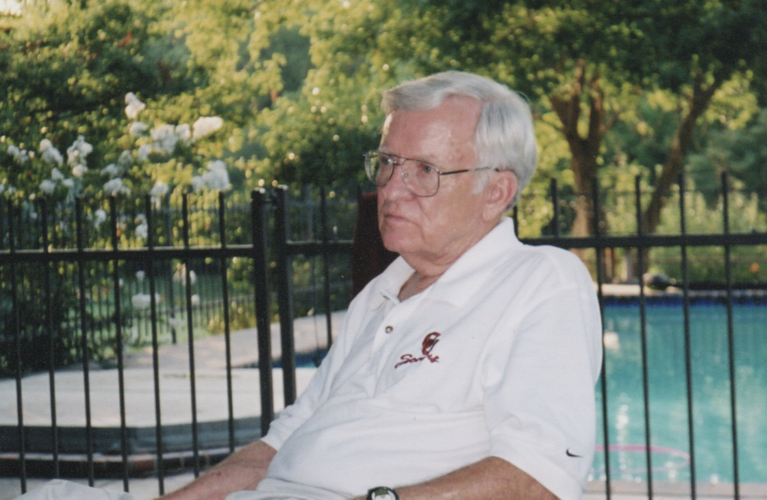
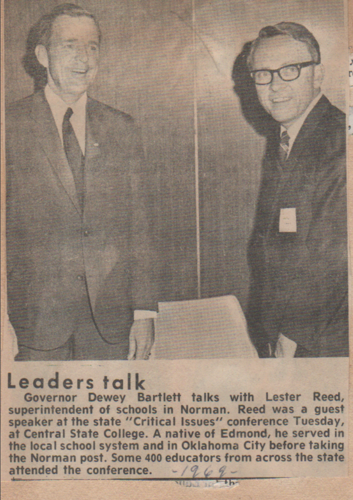
Reed, born on Oct. 4, 1926, spent most of his life in education, notably serving as the superintendent of Norman Public Schools from 1964-76. He was most passionate about teaching and helping people further their education, Larry Reed, his son, said.
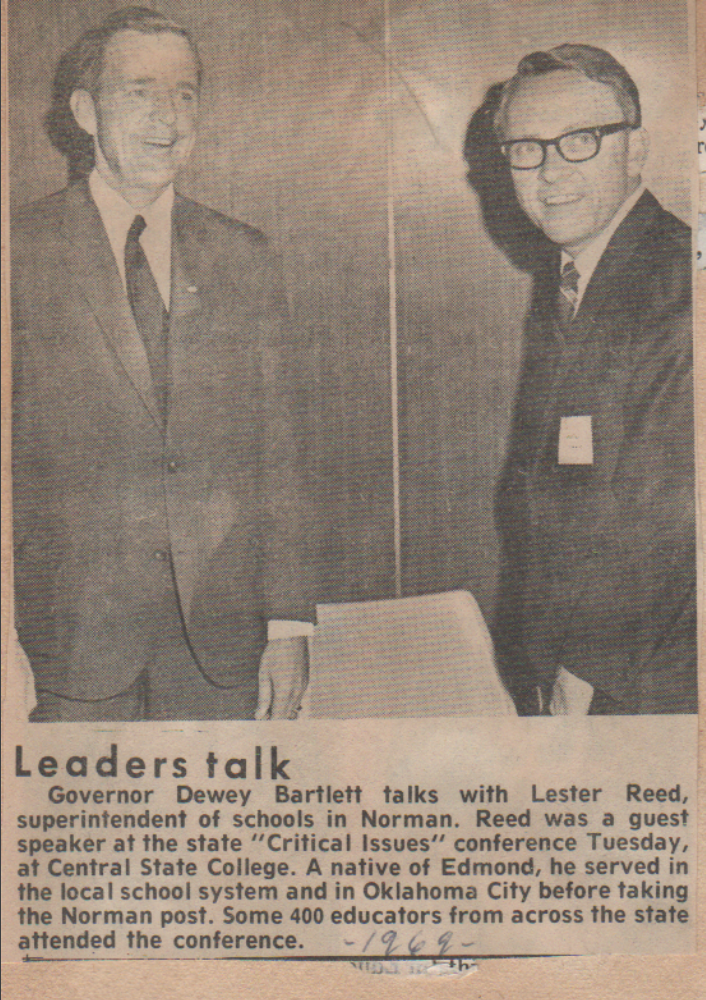
Then-Governor Dewey Bartlett (left) and Lester Reed (right) at an education conference in 1969.
Lester was about to turn 90 in 2016, but as the date grew closer, his physical health declined, preventing him from fully enjoying his life, Larry said. His mind, however, stayed intact, and he was certain he wanted to donate his body to medical research.
“(Donating his body) was fulfilling his express desire to somehow, with his physical remains, benefit research and further education,” Larry said.
The father and son became increasingly close in Lester’s final years, Larry said, and often spoke over the phone. One summer evening in 2016, they chatted on the phone about everything they could think of like they always did.
Less than 24 hours later, on July 14, 2016, Lester died in hospice care. Larry said officials from the OU Willed Body Program picked up his father’s body soon after.
As the OU College of Medicine took Lester’s body to Oklahoma City, his family prepared a memorial packed with community members, Larry said.
Meanwhile, Lester’s remains were prepared with chemical preservatives so they would last long enough for an anatomy lab for first-year medical students.
Larry said it made sense for his dad to donate his body, given his dedication to service and education.
“I’m proud that he was my dad,” Larry said.
In August 2016, the OU College of Medicine invited Larry to a luncheon to meet with the students who would dissect his father’s body in their first medical school course. He took his stepmother, who had been married to his dad for 35 years, and arrived with stories and photos for the students.
The pair sat at a table with eight students, freshly accepted into medical school and anxious to begin their careers. Over sandwiches and tea, the group listened as Larry shared stories and information about his father’s life.
Luncheons like the one at the OU College of Medicine are uncommon, said Jerry Vannatta, founder of the luncheon program. Vannatta was the dean of the OU College of Medicine from 1996-2002 before he stepped down for personal health reasons.
Vannatta grew up in Keyes, Oklahoma, on a wheat farm before he attended Oklahoma City University. He was later accepted at OU College of Medicine and specialized in internal medicine.
“Everything I saw (at medical school) was brand new,” Vannatta said. "None of my pre-med preparation really prepared me for any of it."
One of the first classes Vannatta took when he started medical school in 1970 was the cadaver anatomy lab. Vannatta wasn’t particularly interested in it, which solidified the fact he had no interest in becoming a surgeon. That wasn’t the only reason he wasn’t a fan of the class, though.
“I thought the anatomy lab smelled bad,” Vannatta said, laughing.
Vannatta also disliked the process of dissecting, he said. He was uncomfortable working with the cadavers or even being in the same room as them. Unlike today, there was no luncheon for the students to meet with the families of those who had donated their bodies.
Vannatta graduated medical school in 1975 and remained at OU for his residency, eventually becoming a faculty member in 1980. Though Vannatta wasn’t interested in teaching the anatomy class, he did enjoy his years at OU and was honored to be appointed dean in 1996.
It wasn’t long after he entered his new role that Vannatta was invited by a friend from Duke University School of Medicine to lecture about medicine and anatomy to faculty of medical schools in Taiwan.
Vannatta decided he wanted to learn something himself on his educational trip. He invited the visiting Taiwanese faculty members to present something unique their own schools of medicine did. One man described a luncheon in which the school invited families of donors to meet with students before the lab.
“I was dumbstruck,” Vannatta said.
As soon as Vannatta arrived back at OU from his trip, he pulled the faculty at OU Health Sciences Center together and started planning the school’s first donor family luncheon.
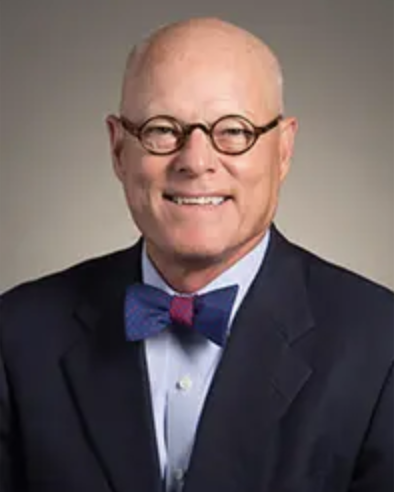
Dr. Jerry Vannatta, previously the dean of the OU College of Medicine. (Photo provided)
Nancy Halliday, the vice chair for education at OUHSC, said using real cadavers allows for more variety in each student’s education, giving them something closer to working with a living patient. The luncheon, she said, is just another part of that.
Before Vannatta began the program, Halliday said students didn’t know who the donor was or what their cause of death may have been. Without any personality to apply to the body, many students lost sight of the humanity of the person they were working on.
Vannatta said when he was taking the anatomy class, it was common for students to cope with the stress of the lab and the rest of medical school with dark humor about the cadaver. While some were respectful, others were not, he said. He hoped implementing the luncheon would change the way students viewed the lab.
When Vannatta proposed the luncheon, not everyone was on board. One professor raised strong objections to it, expressing concern that families would be incredibly upset at having to interact with the students dissecting their loved ones.
“I said to him, ‘Well, I’m sorry you feel that way, but we’re going to do this anyway,’” Vannatta said.
Despite the professor's fears, only two out of around eight families didn’t show up to the first luncheon. While the students and families were apprehensive, the event was filled with chatter about the life of each donor. Vannatta was confident the luncheon had been a success.
Confirming Vannatta’s belief, a study conducted by faculty at OU on the 2005 anatomy class’ participation in the luncheon program showed students were more likely to view the donors as people rather than anatomical subjects.
The lab is one of the first classes students take, Halliday said. It is a rigorous nine-week course with more depth and amount of information than almost any undergraduate course.
“It’s a rude awakening to medical school,” Halliday said.
Still, Halliday emphasized that it helps students build vital study skills and put anatomy in context in future classes.
Starting the lab with the luncheon would impact the entire course and each student’s entire medical school journey because it places an emphasis on people-first medicine.
“They can never lose sight of the fact they are treating a person,” Halliday said.
In fall 2022, Reagan Amason took the anatomy class. Amason graduated from Norman High School in 2018 before attending OU for his undergraduate career. He then started his medical school path at OUHSC in August 2022 after spending most of his life knowing medicine was his calling.
He also knew for a long time that the anatomy lab would be the first class he took at medical school, as well as one of the hardest. He was nervous, but he said he refused to let that stop him from pursuing his medical degree. As his first day of medical school approached, he was prepared by Halliday and other faculty for the luncheon.
Halliday said the college hosts a small orientation for anatomy lab students to introduce the luncheon before it actually happens. There, they instruct the students to keep the conversations about the donor’s life. They also remind students some families might not show up, even if they had previously said they would.
Amason said the luncheon sounded awkward and strange, though he was open to it. Afterward, he said he was glad OU has the program because of the way it humanized the donor he would be working on.
“It's very easy in anatomy, especially in a cadaver lab, to treat this as a specimen, treat it as a learning tool,” Amason said, "But that was a person."
Amason’s donor’s family told his group about the donor’s life, their physical condition and medical history prior to death. Then, when his group went to dissect the person, they saw evidence of almost everything the family had told them about.
When Larry sat with the group of students that would dissect his dad, he also told them about Lester's medical history. He explained that his dad smoked two packs a day for most of his life before having a health scare and quitting cold turkey. He discussed how he read constantly, to the point where one time Larry found 50 books in the trunk of his dad’s car.
“He was an avid reader like I’ve never known,” Larry said.
Larry said the students listened intently, asking questions and prodding for more information about who his father was, not just as a donor.
“They were so delighted to be able to learn the story behind the man, behind the remains they were going to be working with,” Larry said.
A few days after the luncheon, the students found themselves in the lab for their first dissection. Amason said they started with the back, the smell of formaldehyde from the preservation process filling the room.
Although faculty prepared the students before they entered the room, Amason said the experience still felt surreal. He said there was almost a communal reaction as each student realized they were truly in medical school.
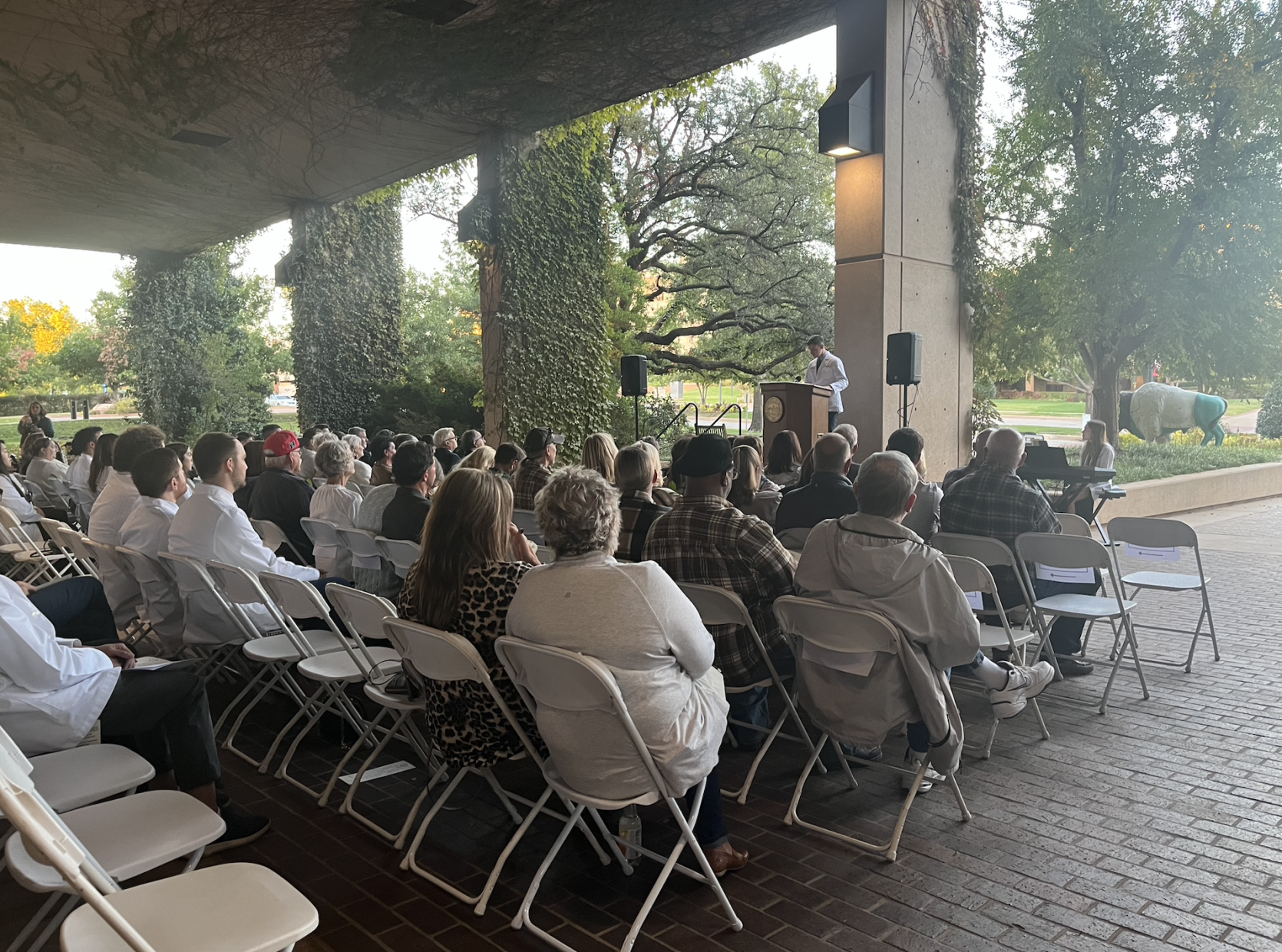
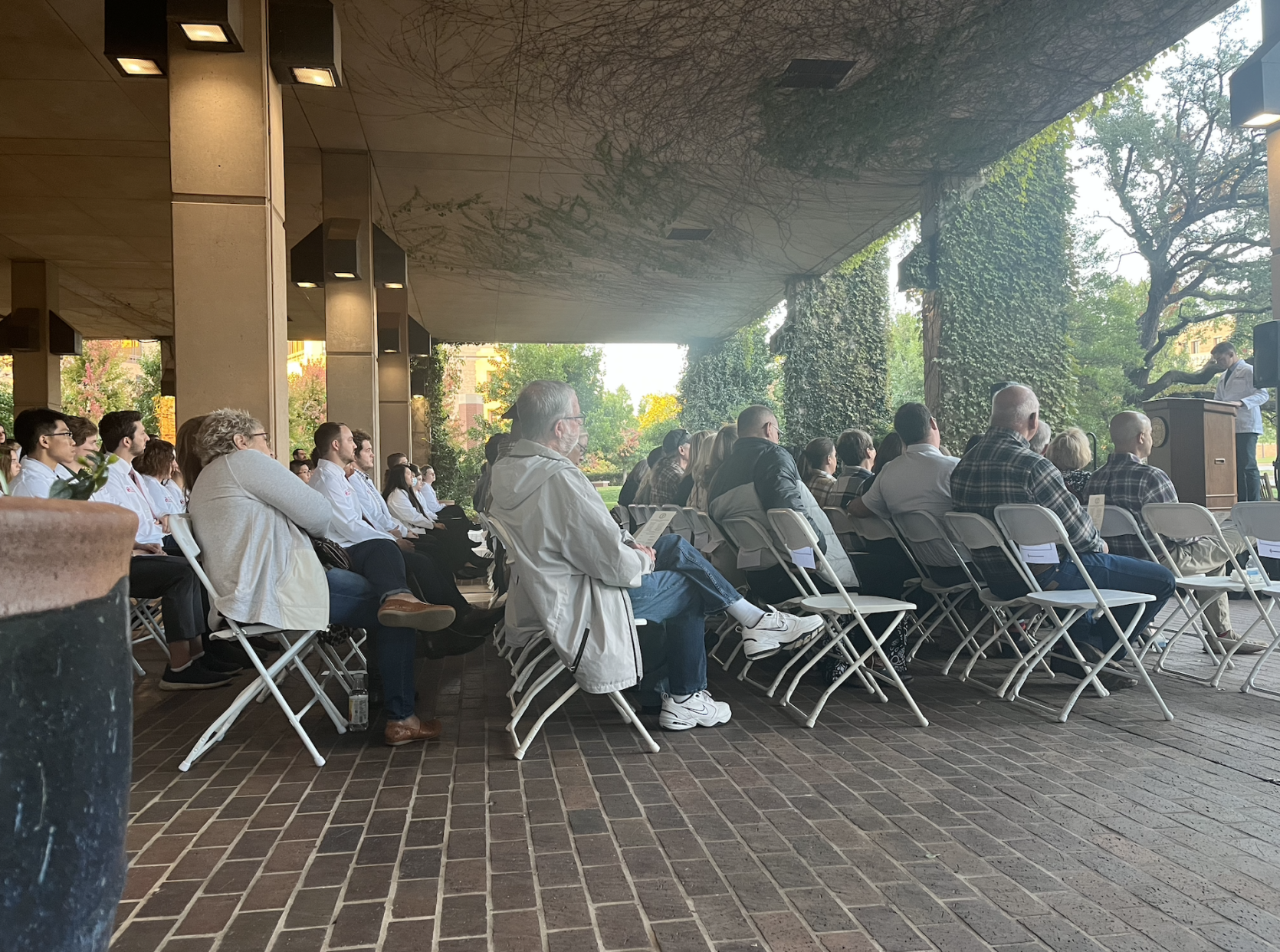
Families and students remember and honor the people who donated their bodies to OU's anatomy program.
As they dissected, moving from the back to the legs, eventually moving to the front, Amason said they talked about what they were seeing and the stories the family had told them at the luncheon.
Halliday said the luncheon reminded students to find emotional meaning in their education while also teaching them to treat their donors with respect. The dark humor in the lab Vannatta had experienced saw a sharp decline. Even the donors’ families felt the impact the luncheon had on the lab.
“It was very fulfilling and comforting to know … his body was going to be receiving a higher level of care and reverence,” Larry said.
Halliday said the luncheon was meant to teach the students not only how to treat a patient, but how to treat the families around them. She said a lot about being a doctor is interacting with families, telling them good and bad news, and being there for them throughout their loved one’s medical journey.
Some families are disappointed their loved ones donated their bodies, Halliday said. However, when they interacted with the students, they could recognize the impact their family members will have.
Some even leave the luncheon considering donation themselves.
At the end of the course, the students hold a memorial service for the donors. While the luncheon is uncommon among medical schools, memorial services are increasingly popular because of the sense of closure they provide to families, Halliday said. Vannatta said he wished it was more common when he was in medical school.
“It’s a thank you,” Vannatta said.
Larry said the memorial was as important to him as the luncheon. He met again with the students who had worked on his father and they told him despite his dad’s age, his brain was younger than the average 90 year old. Larry was delighted because it gave him confirmation of everything he already knew to be true about his dad.
“It provided an element of closure,” Larry Reed said.
The students also felt a type of closure at the memorial, Amason said. Amason helped organize the 2022 memorial because of how passionate he became about his experience in the anatomy lab.
“(The donors) didn’t just affect our education,” Amason said. “They’ll affect the patients that we will soon have in the future because of the knowledge that we’ve gained through learning from them.”
Larry was more than content with his father’s decision to donate his body. He said he was proud of his father and the man he chose to be, even in death. The fact his dad continued teaching after his death meant a lot, Larry said.
“Hopefully, these (programs) will allow scientists and doctors to learn more, to save more lives, to improve the quality of life of many, many people,” Larry said. “That’s what it’s all about.”
This story was edited by Alexia Aston and Karoline Leonard. Francisco Gutierrez and Mary Ann Livingood copy edited this story.
Editor's Note: This story was edited at 11:53 a.m. on Apr. 12 to correct the year Larry Reed was invited to a luncheon at OUHSC.


