It was 1998 when 48-year-old music teacher John Gerber received devastating news for him and his family: he was diagnosed with early onset Parkinson’s disease.
While the diagnosis was heart-wrenching, John and his wife, Midge Gerber, vowed to never allow the disease to disrupt their lives, as they still had children in college.
Midge said she and her husband tried everything from deep-brain-stimulation surgery to tai chi to help him maintain his balance and speech. After finding out about a dance class through the Oklahoma Parkinson’s Alliance, they decided to try something new.
In 2018, the OU School of Dance started offering Dance for Parkinson’s classes, coordinated by OU dance professor and alumna Kathleen Redwine. The classes are free for people with Parkinson’s and their caregivers.

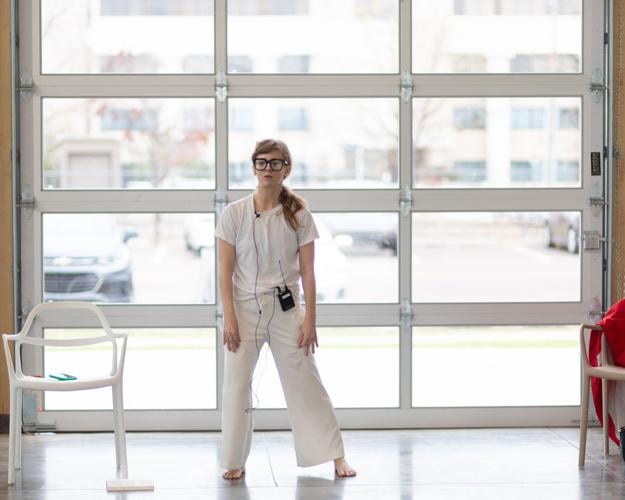
Leslie Kraus during the Dance for Parkinson's class on March 23.
Parkinson’s disease is a movement disorder affected by a lack of dopamine, according to the Michael J. Fox Foundation. It can cause trembling and stiffness of the arms and legs, slowness in movement, and poor balance and coordination.
As the disease develops, it can impact people’s ability to walk, talk and complete simple tasks.
Dancing can help improve motor coordination, balance, muscle strength and other motor skills, according to studies gathered by Dance for Parkinson’s. It can also improve social skills, self confidence and psychological well-being.
Dance for Parkinson’s initially started 22 years ago in New York as a partnership between the Mark Morris Dance Group, a professional modern dance company, and the Brooklyn Parkinson’s Group.
The program now has 28 locations across the country, with over 10,000 participants, according to Dance for Parkinson’s website.
Redwine’s late husband was diagnosed with Parkinson’s disease in 2007. His symptoms were mostly treated with medication, Redwine said she researched alternative supports. They tried exercising, walking and Rock Steady Boxing, which was specifically developed for people with Parkinson’s.
The couple then discovered the Dance for Parkinson’s classes taught by the Oklahoma City Ballet in partnership with the Meinders Center for Movement Disorders, a Mercy Hospital neurology center located in Oklahoma City. Redwine said she and her husband loved the classes, which encouraged her to start offering them in Norman.
With the help of Michael Bearden, OU School of Dance director, they sent Redwine and another faculty member, Leslie Kraus, to attend training classes in New York in the summer of 2018.
A couple months later, OU began offering classes at one of the dance studios located in the Reynolds Performing Arts Center.
Midge said her husband can’t walk as much as he used to, but his mobility has improved because of the class.
“Exercise is the best medicine for people with Parkinson's disease,” Midge said. “That's why we look for everything that we can do in order to keep moving because, if you don't keep moving, you'll end up where you can't move at all.”
Jessica Lynn, an instructor for OU’s Dance for Parkinson’s and a dance and journalism senior, first heard about the classes after her grandfather, Robert L. Lynn, enrolled in them. Lynn said the disease affected her grandfather’s mobility and brain function by the time she enrolled at OU in 2019.
The classes helped him move his body to help maintain his brain-body connection for much longer while also finding a sense of community, Lynn said. She enjoyed sharing the same studios with her grandfather, as she had dance rehearsals while he attended the classes.
“His caretaker was able to see his progression and was able to notify his wife on how it was going,” Lynn said. “We always encourage caretakers, family members, anybody who wants to join in because not only does it make it more of a community experience, but it's also really useful for people who are more progressed in the disease and need an extra helping hand.”
Lynn’s grandfather died during the COVID-19 pandemic, but she wasn’t ready to let go of the classes. She decided to take the required training in New York in the summer of 2022.
Redwine said OU has sent 10 undergraduate and graduate students to receive training since OU started to teach the classes.
Redwine teaches ballet and modern dance, but the classes also include tap and jazz. Other teachers offer flamenco and musical theater classes.
“One thing that’s so much fun is that every dance teacher, no matter what style of dance they teach, can bring some of what they know to share with people with Parkinson’s,” Redwine said.
During the pandemic, classes moved online so people could continue exercising. The online classes helped people build a sense of community during times of quarantine and isolation, Redwine said.
When OU returned to in-person classes, meetings were eventually moved to The Well, a wellness center offering various programs, activities, resources and events to help Cleveland County residents’ well-being, according to its website.
Both Midge and Lynn said the change of location was better for the program, as Redwine said turnout rates increased from 10-15 to 20-25 people.
Midge said she and her husband liked being part of a community where people are going through similar experiences. She encouraged people with Parkinson’s to join the “beautiful community.”

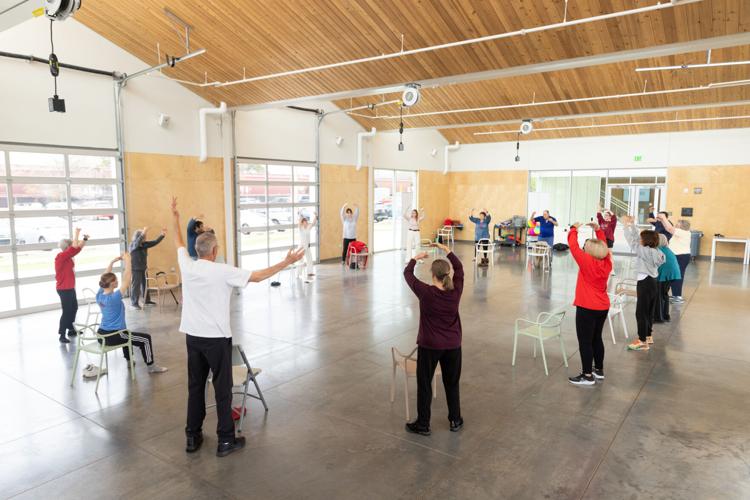
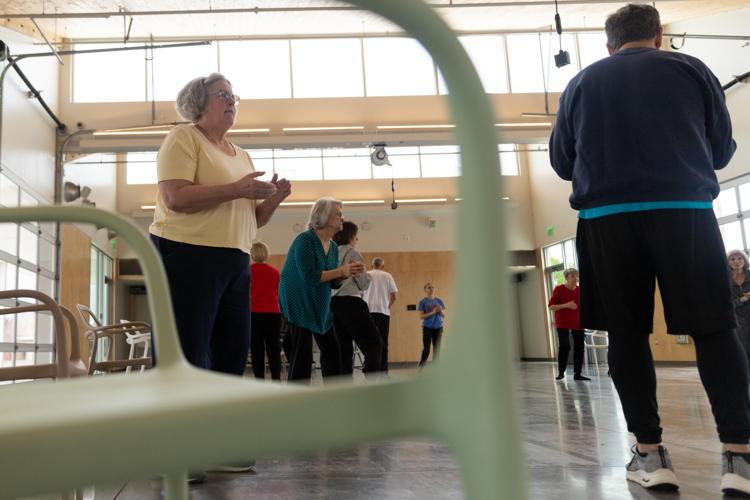
Attendees during the Dance for Parkinson's class on March 23.
Redwine said dancing is good for everyone, including people who don’t have Parkinson’s. She said the program has had a big impact on her, as she saw improvement in her husband’s life and, as a teacher, she gets to see a change in others.
“It’s joyful to be able to share my art form, my passion, with people who have Parkinson’s and with their families, caregivers or friends,” Redwine said. “I’m grateful for the opportunity we have here.”
Summer 2023 Crimson Quarterly

This story was edited by Alexia Aston, Jillian Taylor and Karoline Leonard. Francisco Gutierrez and Alexandra Powell-Lorentzatos copy edited this story.


