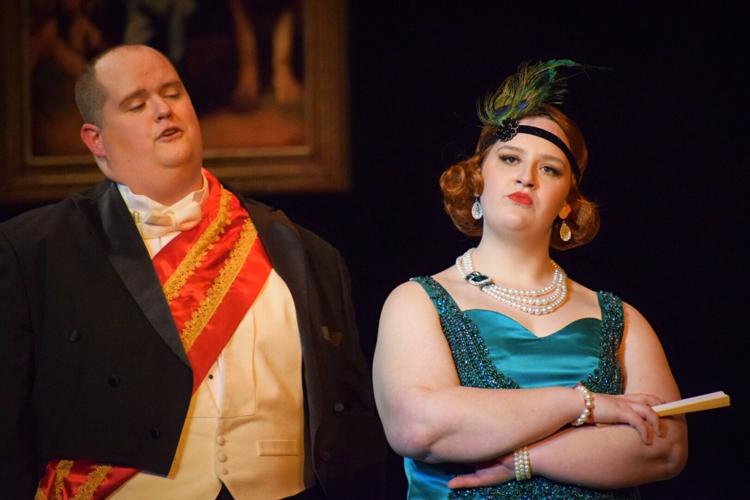

A grandiose story of love and betrayal, the OU School of Music’s production of “The Merry Widow” is an accessible entry point for newcomers to the opera genre.
The operetta’s main storyline follows Hanna Glawari, “The Merry Widow,” who comes from poverty-stricken Pontevedro. Growing up poor, Hanna is now a wealthy young widow. Enjoying her time in Paris, she gains the attention of many French men to the dismay of the Pontevedrian ambassador, who wants her wealth to stay in the country. The Pontevedrian man to arrive in Paris is none other than Hanna’s former lover, Count Danilo.
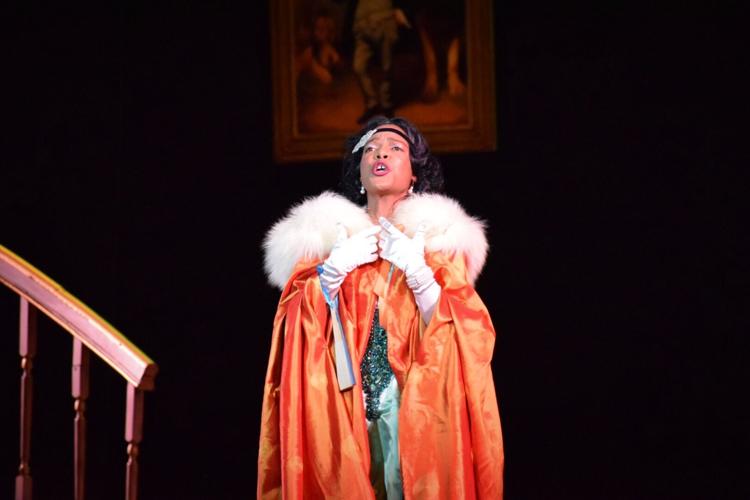
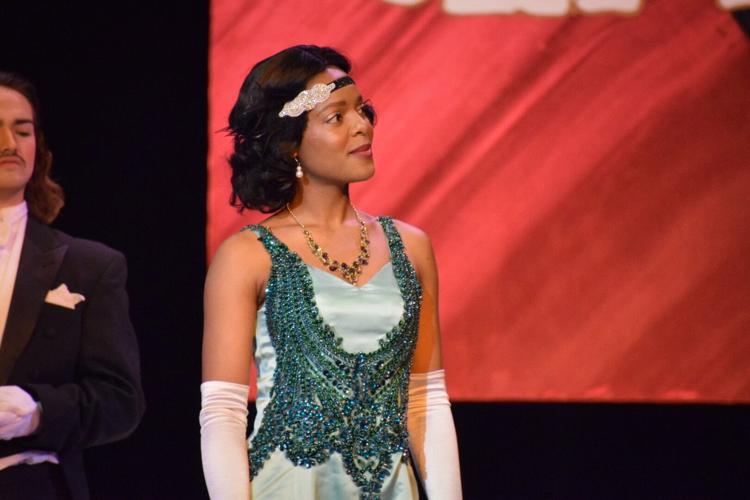
The role of Hanna Glawari is being played alternately by graduate students Julia Pace and Amanda Kosi.
Pace is in her last semester as an opera performance graduate student. After getting a bachelor’s in music education, Pace said she found herself drawn to performance.

Julia Pace rehearses for the upcoming opera The Merry Widow on Feb. 11.
Kosi grew up in Eastern Cape Province, South Africa, and graduated from Southern Methodist University during the COVID-19 pandemic. Unable to leave the United States, Kosi applied to OU and is a vocal performance graduate student.
“The Merry Widow” is an operetta. Though both follow classical technique and style, the distinction between an opera and an operetta is dialogue. Traditional operas are entirely sung, while operettas contain both song and dialogue.
Operas are often performed in foreign languages, which can be intimidating to newcomers following the storyline. In OU’s production of “The Merry Widow,” the song will be in German, but the dialogue will be in English.
“Even if you know nothing about opera, you don't know a single word in German, you will have a great time watching this,” Pace said. “I want to stress that opera is for everyone.”
The production is also heavy in dance, with choreography by School of Dance Professor Rebecca Herrin. As an operetta, the themes in “The Merry Widow” are also lighter than a traditional opera.
“It’s a very interesting story and very exciting because in the past at OU, I have been singing dark roles, more sadness,” Kosi said. “I'm excited about this one because it's a love story.”
In the ever-evolving contemporary art world, traditional Western art forms such as opera, ballet and classical music lack the commercial pop appeal of newer artistic styles, but continue to be studied and produced.
“When people think of opera, they think of rich people wearing fancy gowns and fur coats and going to a fancy opera, and paying a bunch of money for a seat,” Pace said. “People don't realize the opera is accessible and that it's everywhere.”
Pace said that the portrayal of opera in TV and film can lead people to understand it as a static or boring performance art. The traditions of the art’s form, including use of foreign language, drives the performers to be even more expressive in telling the story, Pace said.
“You’re singing in a different language, so you have to put on a show that people are going to enjoy and understand because they don't actually know what you're saying,” Pace said.
Kosi wants people to experience the impact of the vocalists and said their training style has the power to deeply connect with audiences.
“I believe when classical trained people sing, they really get into the souls, the voices, they connect with (the audience), and possibly heal those who are looking for that kind of peace.”
Many of the operas performed today have been performed for hundreds of years, and remain fairly unchanged. The repetition of these works, along with their complex storylines, bring an educational aspect to the production.

Amanda Kosi rehearses her lead role as Hanna Glawari for the upcoming opera The Merry Widow on Feb. 11.
“Opera is one of those art forms that informs people about things that are happening,” Kosi said. “Especially now, because now directors tried to put on shows which relate to real-life situations.”
The use of other languages adds meaning, Pace explained. She said that the use of a different language is part of the storytelling itself.
“We do a lot of operas in other languages,” Pace said. “It adds an extra level of complexity but also tells a different story when you sing in another language.”
Many works of art evoke emotion based on pleasing aesthetics, familiarity, and cultural popularity. However, experiencing a range of emotions is a valid reaction to any art form, and for those hesitant to go to an opera, Kosi emphasized the importance of being receptive.
“They need to have an open mind, because each and every art form I think, is important,” Kosi said. “Whether people don't like it as a genre, but they should always keep an open mind--I think it's important that people should come and see it, because it's educational.”
“The Merry Widow” will be performed at 7 p.m. on Feb. 16 and 17, and at 3 p.m. on Feb. 18 in the Reynolds Performing Arts Center. Details and ticket information are available online.
This story was edited by Shelby Emery.


