


In OU’s recent production of “The Nutcracker,” the spotlight followed performers twirling across the snow-covered stage. But beyond the pirouettes and pointe shoes, crew members hustled under the veil of the curtain.
Design freshman Audrey McGuane said working on crew for "The Nutcracker" was one of the craziest things she had ever done. Every night, she would furiously crank ropes to bring down backdrops and move huge set pieces on and off the stage.
“There’s a lot of hard work that goes into what we do to help the actors enter the world they are performing in,” McGuane said. “You have to have a keen attention to detail because our work ultimately is what draws audience members into the story.”
Without the individuals who work on lighting, participate in crew and design costumes, the puzzle of OU theater would be missing pieces. OU’s Weitzenhoffer Family College of Fine Arts emphasizes education beyond onstage theater through its diverse classes, acting freshman Elizabeth McCullough said in an email.
While McCullough is a freshman, she has also taken production classes like Stagecraft and Costume Construction in addition to being an undergraduate assistant in the scene shop, where props and scene pieces are constructed.
Most bachelor's degree programs require students to put all of their focus on one emphasis, meaning these opportunities would most likely not be possible for McCullough at other universities. OU’s unique program has allowed her to study areas beyond her major, McCullough said in the email.
“I have learned acting on stage, and working for design and production are like two different gears in the same machine — they come together to achieve the same goal,” McCullough said. “Working in the scene shop has given me real work experience to put on my resume that is going to mean and say something about me to potential employers.”
Working backstage has become more than just a hobby for McCullough. She said she hopes to work in a scene shop for a professional theater company after college.
The College of Fine Arts, while emphasizing actors' participation behind the scenes, focuses more intently on the further education of drama majors with an emphasis in design.
Lighting junior Natalie Shipley said she began working backstage on run crew, which moves props and set pieces, during her freshman year of high school. Throughout the remainder of her high school career, Shipley fell in love with backstage theater.
“During my sophomore year, my high school theater director told me I should do lighting in passing,” Shipley said. “At the time, I didn’t think much of it, but now I am so thankful for that moment as I was able to find my passion.”
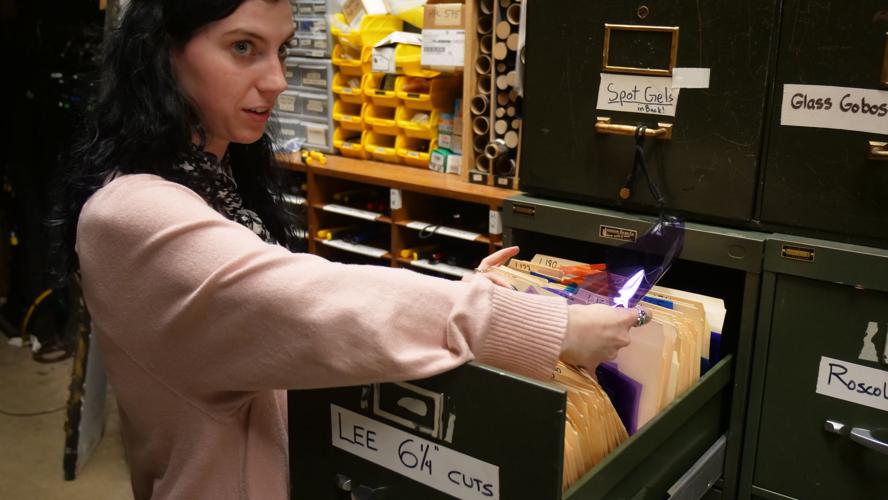
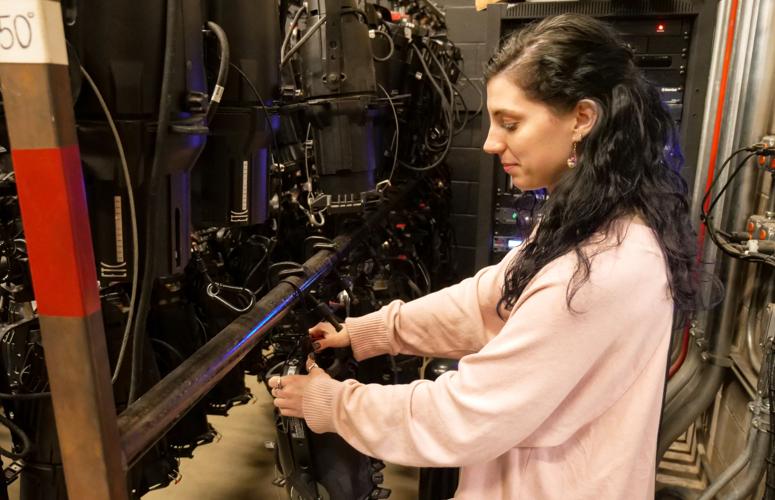
This February, Shipley designed the lighting for her first main stage show: OU’s production of “Blood Wedding.” Her job was to “call focus,” or show crew members exactly where light needed to be and what colors to use to establish the mood.
“I collaborated heavily with the stage manager and programmer in this production, as they both needed to know the timing I had in mind as well as how I organized the lights,” Shipley said.
The art that lighting designers create is challenging because they do not get to see their vision come to life until the stage is set for a dress rehearsal, she said. Unlike costume designers and designers who draft sketches, lighting designers don’t have first drafts, Shipley said.
“My job is intimidating because, during dress rehearsal, designers and advisers from administration watch your work come to life for the first time,” Shipley said. “You may be successful, or you may completely fail, and there is nothing you can do to prepare yourself.”
These high stakes are what make lighting design so appealing, Shipley said.
“Within the first three rehearsals of ‘Blood Wedding,’ our power system almost completely wiped out and the lights were flickering uncontrollably,” Shipley said. “Despite the stress I felt in the moment, I love the anticipation — anything can go wrong, but hopefully it will go right.”
At OU, lighting majors take visual design classes like Computer Automated Drafting, which teach them how to use Adobe programs like Photoshop and Illustrator. This contemporary education is key in teaching students how to adapt to the modern world of theater, Shipley said.
“In the real world, you are most likely not going to live in the same city as your directors,” Shipley said. “These programs serve as an efficient means for us to print all of our paperwork and accurately communicate our vision.”
Lighting students also take classes outside their emphasis while balancing their involvement in OU’s productions.
“Throughout the day, I sit through production meetings, go through programming notes, work with student designers on design drafts, go to my Tap and Intro to Lighting Design classes, go to work, and attend rehearsals in the evenings,” Shipley said. “It’s a lot, but I think having the energy to do it all is a big part of it.”
Students who choose to study drama are required to take 29 hours of drama core classes. This means students within this degree program, whether they have an emphasis in acting or design, will take a wide variety of classes. The classes range from Intro to Acting to Basic Stage Lighting, according to the fine arts degree requirement website.
McGuane, along with being on crew for “The Nutcracker” and a designer for a student-directed show “Lucy in the Conquest,” has also had the opportunity to take acting classes. She said this experience has changed the way she approaches her job.
“While working backstage, I can now use what I have learned from my acting classes to organize the stage so actors can better interact with their environment,” McGuane said. “It has given me a deeper appreciation for the work actors do.”
McGuane said working backstage is interesting because it is unpredictable and requires constant problem solving. It is through these challenges her hard work takes on a new meaning.
“I honestly can’t describe the feeling it gives you when you watch the audience see the show for the first time on opening night,” McGuane said. “Just being there in the moment is so rewarding because it reminds me why I am here and how this is what I am going to do for the rest of my life.”
Ultimately, without the contributions of students who work behind the scenes, actors would not have the foundation they need to put on their best performance, McGuane said.
“Actors don’t have to worry about what’s going on because they know we’ve got their backs,” McGuane said. “We’re going to put on our best version of the show that we can so they can put on the best version of the show they can.”


