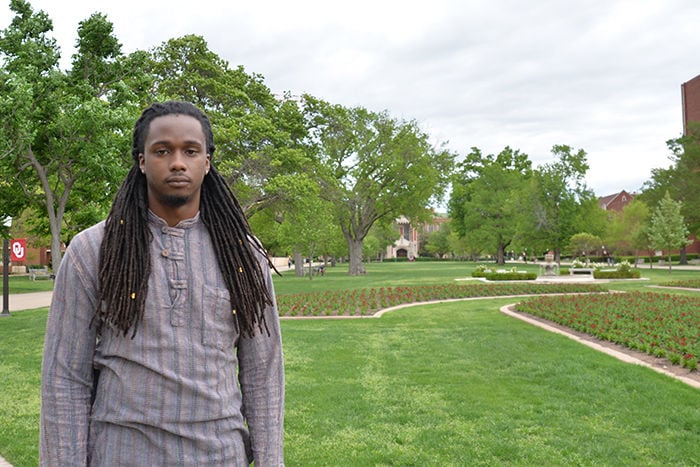


In two weeks, students across OU’s campus and their families will gather as new graduates receive diplomas, ready to begin the next phase of their lives. Among the crowd will be George Lee, graduating with a dual master’s degree in public relations and adult and higher education. He will have taken another step in breaking his family’s cycle of incarceration.
Lee’s parents have been in and out of prison his whole life. While many soon-to-be alumni reminisce about their freshman year roommates and late nights at the library, Lee looks back at the adversity he has overcome.
During his freshman year at OU, Lee said his father received a 15-year sentence. He was in and out of prison, mostly for selling drugs. Then, the summer after his sophomore year, his mother received two years. She was in and out for drugs and other crimes, like writing bad checks.
Lee was left to worry about his seven younger siblings. The only way he could communicate with his parents was through mail or hopping on a highway to go visit them.
“As I’m graduating now in December, it’s kind of like reflecting on just everything that I’ve experienced since 2009,” Lee said.
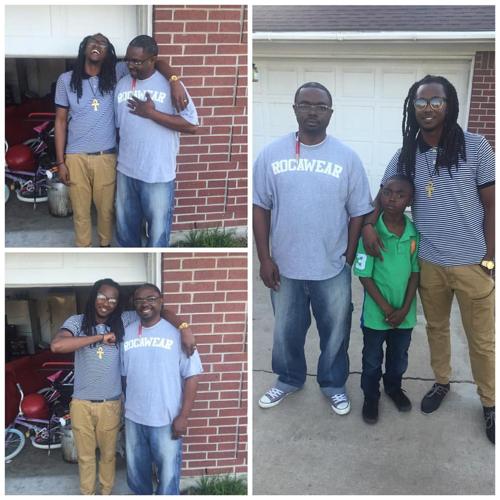
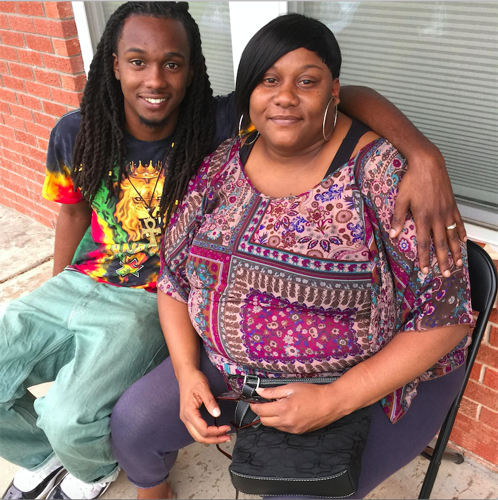
Now both his parents are out of prison. His father got out early on parole, and they will both watch him graduate.
“Both of my parents will be coming up here to see me graduate. They’re very proud that I was able to break some generational poverty, some cycles that both sides of my parents experienced,” Lee said.
Receiving an education
Lee grew up in Bryan, Texas. His parents had him in 1990 at the height of the crack cocaine epidemic. His mother was 16 years old and his father was 17. Some of Lee’s earliest memories are of him seeing his father in jail.
Lee’s father was incarcerated for a significant portion of his time in elementary school. His mom’s stints in jail were short, only lasting a few weeks at a time. During hard times, Lee would go stay with his grandparents. However, when he got to middle school, his parents stayed out of trouble for a while.
Lee’s father worked to keep Lee off the streets, instilling in him that if he pursued an education, things would be much easier for him.
“He let me know that if he ever found out that I was trying to dabble in the streets or anything of that nature that he was going to kick my butt for it,” Lee said. “I was encouraged in a very unique way to stick into school and kind of break the cycle because my dad knew everything that came along with dealing with drugs and things of that nature.”
The U.S. incarcerates more people than any other country in the world, according to the Prison Policy Initiative. The fact that many of the people behind bars are parents is often lost, said Caitlin Dryke, communications and volunteer manager for New Hope, a nonprofit in Tulsa that offers programs for children with incarcerated parents. Dryke said that the stigma surrounding incarceration has adverse effects on kids.
“There is an attitude that still persists and pervades about punishing these children because of decisions of the parents,” Dryke said.
School gave Lee an outlet to imagine things in ways that he couldn’t outside the walls of an education. It allowed him to break away from the day to day constraints that his life at home put on him. School gave him the full meal that the food stamps his family lived off couldn’t always provide.
He was labeled as gifted and talented, recognized in school for his intellect by administrators. However, the educational system also labeled him as the “magical negro,” a respectful black person breaking the mold of how society sees all other black people, Lee said.
“That’s why I say I had a very complex relationship to school because I was able to kind of find some of the ugliest woes of the world while also some of the most beautiful aspects of the world,” Lee said.
Lifelong connection
Christi Byerly met Lee when he walked into her seventh grade speech and communication class at Sam Rayburn Middle School.
When Byerly first met Lee, she thought he was coming from a middle-income family with role models for parents. She quickly realized that was not the case.
Lee’s dedication to his education stood out to Byerly.
“The first time I walked into the classroom, the connection was there,” Lee said.
That connection has lasted 13 years.
“She was really able to teach me certain stuff that I didn’t have access to in my community,” Lee said.
When Lee went on to high school, Byerly told him she needed to see his report card every six weeks. Every six weeks, Lee would call her when he got his report card, and Byerly would pick him up from school and take him to eat.
“I just wanted him to know that those grades mattered,” Byerly said.
Late in his junior year of high school Lee, a member of the basketball team and student body president, told Byerly that, someday, he may want to run for government office. Byerly encouraged him to join speech and debate.
Lee told Byerly about his first tournament and how on the bus everybody had snacks and he felt different.
“Well you know, we can fix that,” Byerly said. She went to the store and bought him four bags of junk food for his next tournament.
“I didn’t ever make sure he had good basketball shoes, but I always made sure he had his school supplies and what he needed to get that education,” Byerly said.
Byerly had relatives living in Southlake, Texas. They said Lee could come stay with them the summer before he went to OU. One relative, Byerly’s sister-in-law’s sister, worked at a golf course there and got Lee a job. Whatever he put into savings, the relative would match.
That summer, Lee was introduced to lawyers and doctors and people who had achieved high success in life.
“That was his first taste of what an education truly did,” Byerly said.
Heading to OU
When his senior year approached, Byerly felt that if Lee stayed in Bryan, he’d potentially be able to follow the missteps of others in his family. Although he had gotten a full ride to Texas A&M based on his academics, Byerly encouraged Lee to look into OU, a school she had gone to for three years.
“I just wanted him to see what life was like outside of Bryan-College Station,” Byerly said
During Lee’s first semester at OU, he almost flunked out. His father had gone back to jail. He was worried about how to be there for his siblings and also be at school. He was put on academic probation his second semester and didn’t have the resources to pay his tuition.
Byerly co-signed a loan for Lee so he could continue his education.
“I always told him, 'You know, if it were easy, everybody would have a high school degree. If it were easy, everybody would be in college,'” Byerly said.
Dryke said one of the issues students with incarcerated parents face in college is the lack of support.
Although Lee had Byerly, many kids with incarcerated parents don’t have immediate people they can turn to for assistance with paperwork, course management and other difficulties.
“Once they’ve graduated and moved on to college, there is not a lot of support for them once they’re there,” Dryke said.
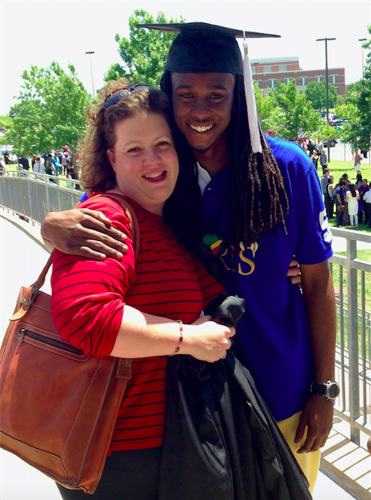
Byerly has served as Lee’s support system, and in two weeks she will watch Lee graduate with his master's degree.
“I would tease him that I was his white mama,” Byerly said
Now a parent himself, Lee is married with a 15-month-old daughter and a son on the way. He owns his own home and will soon have a graduate degree.
When Lee was a child, he lived on food stamps and section 8 housing.
“My daughter will never have to eat sleep for dinner,” Lee said.
He aspires to continue steadily increasing his family’s quality of life. Lee’s daughter will be raised with things he never had, he said. However, he wants to make sure she knows that even though she has privileges, they still have family back in Bryan who don’t.
“I don’t want her to forget and/or not know about how I was raised,” Lee said.
Editor's Note: Since The Daily spoke with George Lee, his wife gave birth to their son Zane Amir Lee.


