

Robyn Tower and her husband have lived in their two-story Victorian home in Norman’s Old Silk Stocking neighborhood for 42 years.
When Tower and her husband bought the house, her parents considered it “unlivable,” but it was affordable for the young couple. Over the years, Tower and her husband, an architect, have renovated the 125-year-old house, making it their long-term home.
Amid increasing enrollment at OU and the university's move to the Southeastern Conference, Tower and other residents of Norman's oldest neighborhoods are raising concerns over community preservation.
As these changes unfold, residents expressed a desire to protect historical neighborhoods from increased traffic, home renovations and short-term rentals that affect neighborhood accessibility.
Old Silk Stocking neighborhood
In the early 20th century, Norman’s Old Silk Stocking neighborhood was a residential hub for city leaders and prestigious Normanites.
Though not defined by the city as a historic district, the neighborhood between Main and Robinson streets and between James Garner and Porter avenues is often considered historic because it contains some of Norman’s oldest standing homes.
Old Silk Stocking has a population of just over 1,400 people, according to the city’s website. The neighborhood’s median age is around 34 years, with nearly 3 in 4 residents owning their home over renting.
Tower, who currently serves as president of the neighborhood association, said one of the biggest issues her neighborhood faces is Airbnbs and other short-term rentals. She has noticed an increase in short-term rentals in her area since OU’s move to the SEC in 2024.
“Airbnbs are a big issue,” Tower said. “Our concern is that one day you wake up and you’re the only neighbor on your street. Every other house is an Airbnb. … We just don’t want to lose neighbors.”
Tower said Old Silk Stocking residents are advocating against large developments — like other apartment complex projects in Norman — from being constructed in their neighborhood.
“When they started building those giant student housing things next to teeny, tiny little houses, that was kind of what motivated a group of us to think: We need to be paying attention to what’s going on,” Tower said. “We need to have a neighborhood association. We need to be talking to each other. We really need to not just wake up one day and see what’s happened to our neighborhood.”
Tower said despite an increase in short-term rentals, the neighborhood hasn’t seen a significant change in the number of student residents.
“There’s lots of college kids living in our neighborhood already, but they’re mostly in existing houses that are being rented,” Tower said. “We don’t have really student-built housing in our neighborhood like you do in some of the other closer-to-university neighborhoods.”
Ryen Talbert, an OU psychology junior, lives in a new two-story house in Old Silk Stocking. Talbert has rented the home with three other people since August.
Talbert said she likes the quiet atmosphere and affordability of the area.
“We’re still super close to campus,” Talbert said. “Once you get closer to campus, you’re paying almost, sometimes close to double what we pay here.”
Next door to Talbert lives Barbara Norton and her husband Allen Hertzke, who are both retired OU professors. Norton and Hertzke have lived in Norman for 40 years but recently moved into their new two-story home in Old Silk Stocking.
Norton said she and her husband are not typical Old Silk Stocking residents.
“We haven’t lived here very long, and we aren’t living in a sort of house that’s been here,” Norton said. “We came in as outsiders, but we wanted to be here.”
Despite living in a new house, the couple worked to make the home fit the neighborhood.
“We were respectful of the neighborhood and constructed a structure that would be compatible with other historic structures in the neighborhood,” Norton said. “We kind of went full circle but came around to doing our best to fit in the neighborhood — to be a part of the neighborhood.”
Norton and Hertzke have an adult daughter with disabilities and designed the home to accommodate her while doing their best not to affect nearby residents.
“For us, this design was critically important,” Norton said. “We wanted her close, and so having an (additional unit) in the back, as long as again it doesn’t encroach too much on the feeling of the neighborhood.”
Norton said she and her husband appreciate living next to students.
“We think it’s delightful …,” Norton said. “We always make friends with the students. My husband and I, for years, lived in the dorms as faculty-in-residence, so we're pretty accustomed to being around lots of undergraduates.”
Norton believes having rental properties in a neighborhood is important.
“We’re a homeowner-owned property, and everybody on the property is in our family. Now that’s not true for everybody around here, and that doesn’t diminish the value of having rental housing in any city,” Norton said. “That’s critically important, especially when it’s convenient for students, for example, and even young professionals.”

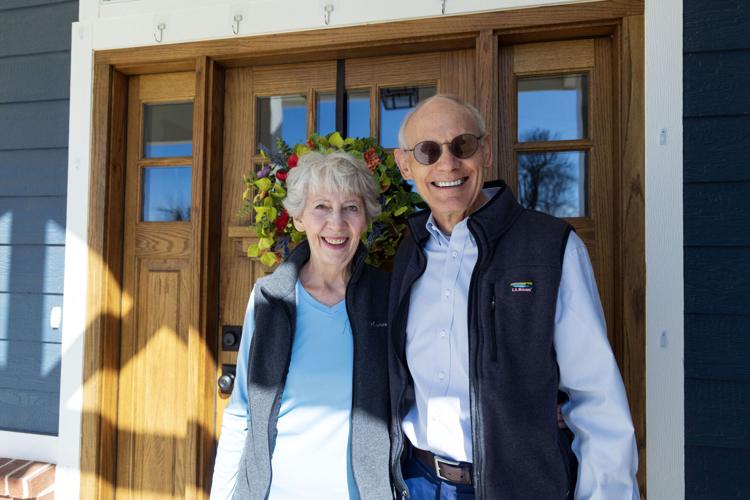
Former OU professors Barbara Norton and her husband Allen Hertzke outside their home Feb. 19, 2026.
The Oklahoma Supreme Court ruled in February against a petition to turn the Rock Creek Entertainment District to a public vote. The district will include an arena featuring some OU sports as an anchor tenant.
Norton believes the district will affect traffic in her neighborhood but that the university overall enriches the lives of Norman residents.
“It's not just an economic engine. It's an engine for creativity and problem solving and entertainment, …” Norton said. “The other asset, of course, that’s quite significant, is just the influx of educated and talented people who get involved civically.”
Hertzke echoed this sentiment.
“The university, in a sense, impacts this area because it offers so many amenities, …” Hertzke said. “The arts, the sports and just the campus, it’s so accessible.”
Tower believes the entertainment district has “saddled” Norman residents with debt and will affect the walkability of Old Silk Stocking.
“The big impact for us might be that the places we go that are near and walkable will all of a sudden go, …” Tower said. “If everything starts moving over west to that part of town, then you kind of lose some of the walkability.”
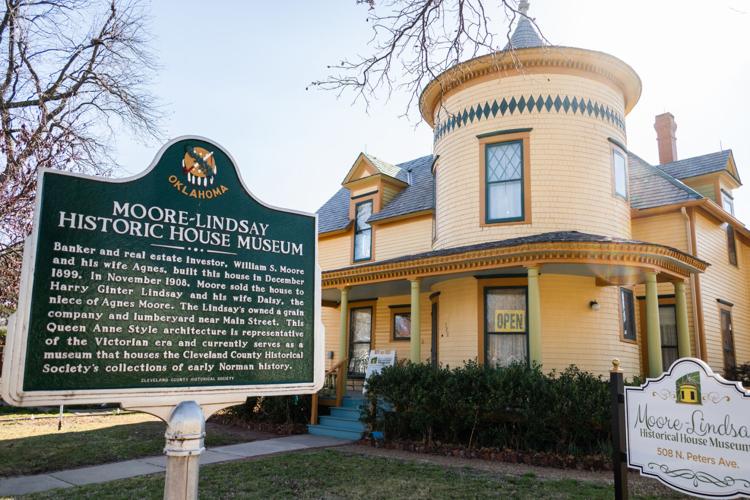
Amy Pence, manager of the Moore-Lindsay Historical House Museum in Old Silk Stocking, expressed concerns for the entertainment district’s impact on visitor numbers.
“I’m worried that the arena is going to pull everyone (in) that direction. But I think that, at least on big event days when there’s a lot of people, they’re going to go through Norman, …” Pence said. “So even though we’re a little off the beaten track for people who aren’t locals, … hopefully they will find us too.”
Chautauqua Historic District
Norman’s Chautauqua Historic District was established in 1995. It includes the area between Symmes and Brooks streets and College and Lahoma avenues, excluding university buildings.
Most homes in the district were built in the 1920s. The area reflects the university leaders who assisted in the development of the city, according to the district’s bio from the city of Norman.
Steven Russell and his family, residents of Norman’s Chautauqua Historic District, have lived in their rented home for about 35 years. He said most home renovations in the area happened in the ’90s.
“The ’90s was when most of the flipping went on …,” Russell said. “You could have bought any house on this street for like 30 grand.”
Before moving into his house on College Avenue, Russell lived in a garage apartment on Monnett Avenue. He said the area has been entirely renovated.
“It’s been flipped pretty much and it’s all new apartments. Yeah, I wish they’d have left the whole neighborhood alone,” Russell said. “Because (the) bottom line is, what’s really affected these as much as anything is all the new apartments that OU’s built for student housing.”
David Hensley, a resident of the Chautauqua Historic District, hopes historic housing will continue to be preserved in Norman.
“It’s a great street…,” Hensley said. “I really hope that we continue to preserve these old houses, that folks continue to keep them up.”
Hensley and his husband have lived in their 1932 home in the Chautauqua Historic District for four years.
“It’s been interesting. We’ve definitely seen a few houses kind of change hands and go in both directions,” Hensley said. “Some houses kind of go from single-family to rental housing. Some go from rental housing to single-family. So we’ve seen a few changes.”
Much like Old Silk Stocking residents, Hensley praised the walkability of his historic neighborhood.
“My husband teaches at the university, and we like feeling the energy of a college campus. We love the walkability, being able to walk to Campus Corner and walk through campus itself in the afternoon,” Hensley said. “It’s kind of the best of both worlds. You get a bit of a neighborhood feel, but you also get the energy of campus.”
Rena Uddin, an OU biology junior, lives on Chautauqua Avenue in the Chautauqua Historic District. She, along with her three roommates, moved into the home in July 2024. According to Uddin, her house was built in 1926, making the house nearly 100 years old.
Uddin said she would estimate the proportion of OU students and Norman residents living in the district to be an even split, but notes her area of Chautauqua has more students.
“On our block of Chautauqua, it does seem 50-50, almost 51 (percent) college students, 49 (percent) Norman residents…,” Uddin said. “It's pretty college-dominant. … At least where we live.”
Uddin added that the near-even split in resident demographics has led to “minimal” interaction with Norman residents compared to college-age residents.
“I haven't had that much interaction with our older neighbors…,” Uddin said. “We've never really come across or spoken to them.”
Uddin recognized the historical significance of her home and the area she lives in and said her home acts as a middle ground between the history of the district and OU students living in the area.
“What makes our house an anomaly here in the district is that it's been historically a college student house,” Uddin said. “Our landlord's father actually lived here back when he was a student at OU, and funny enough, we actually have a couple (of) friends whose parents have lived here before.”
Uddin noted some of the difficulties that landlords have when attempting to renovate homes in the district, citing the city of Norman’s construction restrictions.
“Our next-door neighbors’ (grandfather) purchased the house, and they gave it a facelift,” Uddin said. “They redid the windows, relaid the bricks, reinstalled appliances, redid the floors; it was a complete renovation of the house. They weren't made aware that all of those changes had to be approved by the city before they were made.”
Uddin said she does not believe the district’s historical value is being diminished by an increase in OU student residents.
“I wouldn't necessarily say the historic value of the district is being lost by bringing in more college students or allowing more college renters in the area,” Uddin said. “Especially knowing the parameters of renovations that are (allowed) to be made in these houses and the regulations and restrictions.”
Avery Mask, an OU sonography junior, lives on Chautauqua Avenue in the historic district. In an email to OU Daily, she wrote that she has noticed an increase in college students living in the district. Mask wrote that areas like the district are changing to accommodate more OU students.
“Rents are continuing to go up in price, and to keep up with this growth, the historical areas are getting more profit to compensate,” Mask wrote.
Mask noted the positive relationship she and her six roommates have had with both OU students and Norman residents.
“The relationship with fellow students is more social, while the relationship with residents is more educational and about certain issues that happen in the community,” Mask wrote. “We do get along well with both students and residents! Residents have never seemed to be upset about the growing population of students on the street.”
This story was edited by Macey Thaxton and Anusha Fathepure. Andrew Higgins and Gretchen Schultz copy edited this story.


