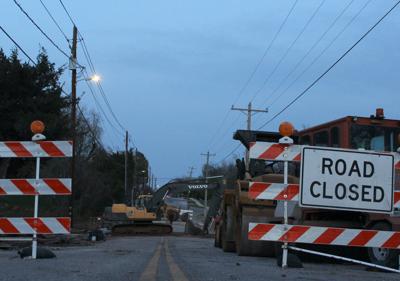

As Normanites prepare for traffic through construction, Norman officials are seeking federal funding to repair and rebuild bridges and create a more pedestrian-friendly city with additional sidewalks and bike lanes.
Construction is expected to affect traffic across Norman for up to 10 years, as multiple projects are in place to replace and build bridges, sidewalks and bike lanes.
Norman Director of Public Works Shawn O’Leary said the city of Norman needs $45 million worth of funding to enact a bridge maintenance bond program, a 10-year plan which will build two bridges a year. Of all 77 bridges in Norman, 10 need to be replaced and 10 need to be started from the ground up.
The city-wide costs of construction primarily relies on bond funding, which is a local loan with a 20-year debt service.
Federal funding is typically spread throughout the state rather than being given to a specific city, meaning Norman would receive $3 million at most, O’Leary said. Loans are another source of funding, but O’Leary said they are unpredictable and usually not substantial.
Voter approval is required to receive federal funding, which was unsuccessful in both 2016 and 2019 due to Norman voters’ opposition toward the two proposals for improving stormwater utility.
Over 70 percent of voters opposed the 2016 proposal to reduce runoff of pollution into Lake Thunderbird, Norman’s main water source, because they felt the city did not adequately develop utility rate fees and the proposal was unclear on exemptions and rate deductions, according to KGOU. O’Leary said he hopes there will be a fall election this year, as the Norman City Council has not yet set a date.
Voters are concerned about the Access Oklahoma turnpike expansion project and the south extension turnpike’s demolition of Norman neighborhoods, which the Department of Transportation has not yet applied to its agenda, according to News on 6.
“I like to remind folks that we really can't run our programs on grants. We have to have more reliable sources of funding,” O’Leary said. “That's where bond issues and local tax bases really are the answer to a sustainable system.”
In July 2021, the Imhoff Creek Bridge faced structural damage after a rainstorm. The bridge was closed the following week after being inspected for dangerous structural issues. The Imhoff Creek Bridge exemplifies what may happen to more bridges in the future if they are not replaced, O’Leary said.
The bridge reopened April 12 following the completion of an emergency repair project. Construction will continue over the next couple of weeks on the remaining items adjacent to the roadway — including final sidewalk sections and handrail and slope stabilization — which will require intermittent, short-duration lane closures.
O’Leary said Norman strives to place sidewalks on both sides of the road and widen certain roads, such as 36th Avenue Northwest, as well as ensuring bus stops are accessible to pedestrians.
President and CEO of the Norman Chamber of Commerce Scott Martin said bicycle traffic is always accommodated when considering new infrastructure projects, as Norman’s bicycle master plan is prioritized. Bike lanes require $1 million for every mile, O’Leary said.
According to O’Leary, in 2022, a multimodal bike lane will be built on Constitution St. to accommodate OU's pedestrians and bicycle traffic. A recent mile-long bike lane was built on Oklahoma State Highway 9 and a half-mile bike lane was finished near Ruby Grant Park.
O’Leary said the bridges in question range from rural east Norman to the heart of downtown Norman, meaning construction will affect bridges across the city.
“They're ready to turn dirt,” Martin said. “They just need funding to make it happen so that the federal investment into the local projects can get these projects underway and then completed in a more timely finish.”
According to Martin, Norman has benefited greatly from federal funding, with major contributions applied to Interstate 35 and other interchanges in the last 10 years. The authorization process to receive funding is “deliberative” and takes time to take effect.
Martin said he hopes federal funding is focused on more airports, such as the Max Westheimer Airport, in addition to roads and highways.
According to Transit and Parking Program Manager Taylor Johnson, the Federal CARES Act allocated $5.1 million to be spent on a new transit maintenance facility on the city’s North Base, making one of the most significant infusions to date of the new infrastructure. The new transit maintenance facility was necessary after the transition of the public transit service from the university to the city. The facility will store large public transportation and public safety vehicles, according to the City of Norman’s website.
“Everybody’s either a pedestrian or bicyclist at the beginning of a trip,” Johnson said. “We are committed to having pedestrian-friendly infrastructure and bicycle-friendly infrastructure because you need to access the transit system.”
Johnson said the American with Disabilities Act Standards for Accessible Design Compliance group is working to address gaps in existing sidewalks. There are also plans to replace two 17-year-old buses with battery electric buses in the summer.
There are currently 16 streets under maintenance, with sanitary sewers along 12th Avenue Northeast and multiple engineering projects to widen roads.
Construction will impact traffic on Lindsey Street, Main Street, Robinson Street and other roads while sidewalks are filled in, bike lanes are added and bridges are replaced and built across the city, according to Martin.
“It’s inconvenient and difficult while (construction) is happening,” Martin said. “But once it's done, it lessens the impact on individuals and businesses. Once they start, they get them done as fast as they absolutely can to minimize the disruption.”
This story was updated at 10:14 a.m., April 13 to reflect the reopening of the Imhoff Creek Bridge.


