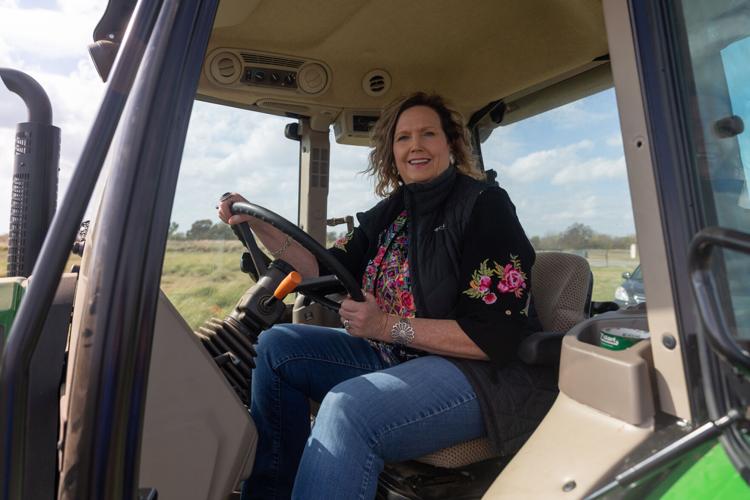


With Cleveland County currently in extreme drought, local farmers described struggling with major economic impacts, rising production costs and inadequate rainfall.
Cleveland County and central Oklahoma are currently in extreme drought, according to the US Drought Monitor. Local farms in the county said they’re worried about how this could negatively impact agricultural and livestock producers.
Norman received an average of 2.357 inches of rain in 2022, according to Oklahoma Mesonet, a network of environmental monitoring stations. With significant decreases in precipitation comes droughts, like the one Cleveland County is currently in, Jeffrey Basara, an OU associate professor of meteorology, said.
Jona Kay Squires, a producer at DJ Horton Farms, said everything from managing feed sources to freshwater for their cattle has been impacted by the drought. Squires said she believes the impact on production and farming comes from people themselves.
“(Conservationist) Neil Sampson said in his book “For Love of the Land,” ‘What we do to the land, we do to ourselves,’ and I'm a big believer in that,” Squires said.
DJ Horton Farms is a fourth-generation commercial and purebred beef cattle operation south of Norman. They sell local ground beef by the pound at the farmers market in Norman and direct beef wholesale and halves to consumers in the Cleveland County area. DJ Horton Farms also hosts tour groups to view the farm and spread awareness about agricultural challenges.
DJ Horton Farms has access to well water and solar pumps. A lot of ranchers in the area, Squires said, rely mostly on groundwater, which the drought has limited.
Compared to past drought years, 2022 has provided more challenges from higher farming resource prices due to inflation, Squires said. She said producers struggle to weigh what risks to take when determining how long the drought will last.
“You have a combination of factors, making it probably more difficult and more painful on the pocketbook for producers,” Squires said.
Fertilizer, seed and chemical prices increased due to inflation, according to the American Farm Bureau Federation. These production costs make up about 17.5 percent of on-farm expenditure. The Farm Bureau expected fertilizer to increase by 6 percent from 2021 to 2022. Inflation coupled with the national labor shortage is impacting food production and quality.
For many producers, the drought in Cleveland County has significantly impacted their crop yield.
Lucas Northcutt, a third-generation agriculturist from Lexington, OK, said his forage production crops yielded half their usual amount because of the inadequate rainfall.
“You can really tell what the effects of limited rainfall can do … with drying up ponds, lack of forage, … and there’s just no pasture there,” Northcutt said.
While Oklahoma’s agricultural industry has taken a large hit because of the drought, Basara said, the state’s significant livestock industry suffered even more.
“When we have droughts like this, especially in the summer, it leads to a lack of vegetation but that means lack of forage for agriculture. … Producers are faced with a choice,” Basara said. “They can either buy hay or forage that they use for livestock, or they can sell.”
Basara emphasized the difficulties of recovering livestock losses compared to agricultural losses. He said that compared to replanting crops, rebuilding herds takes years in the livestock industry.
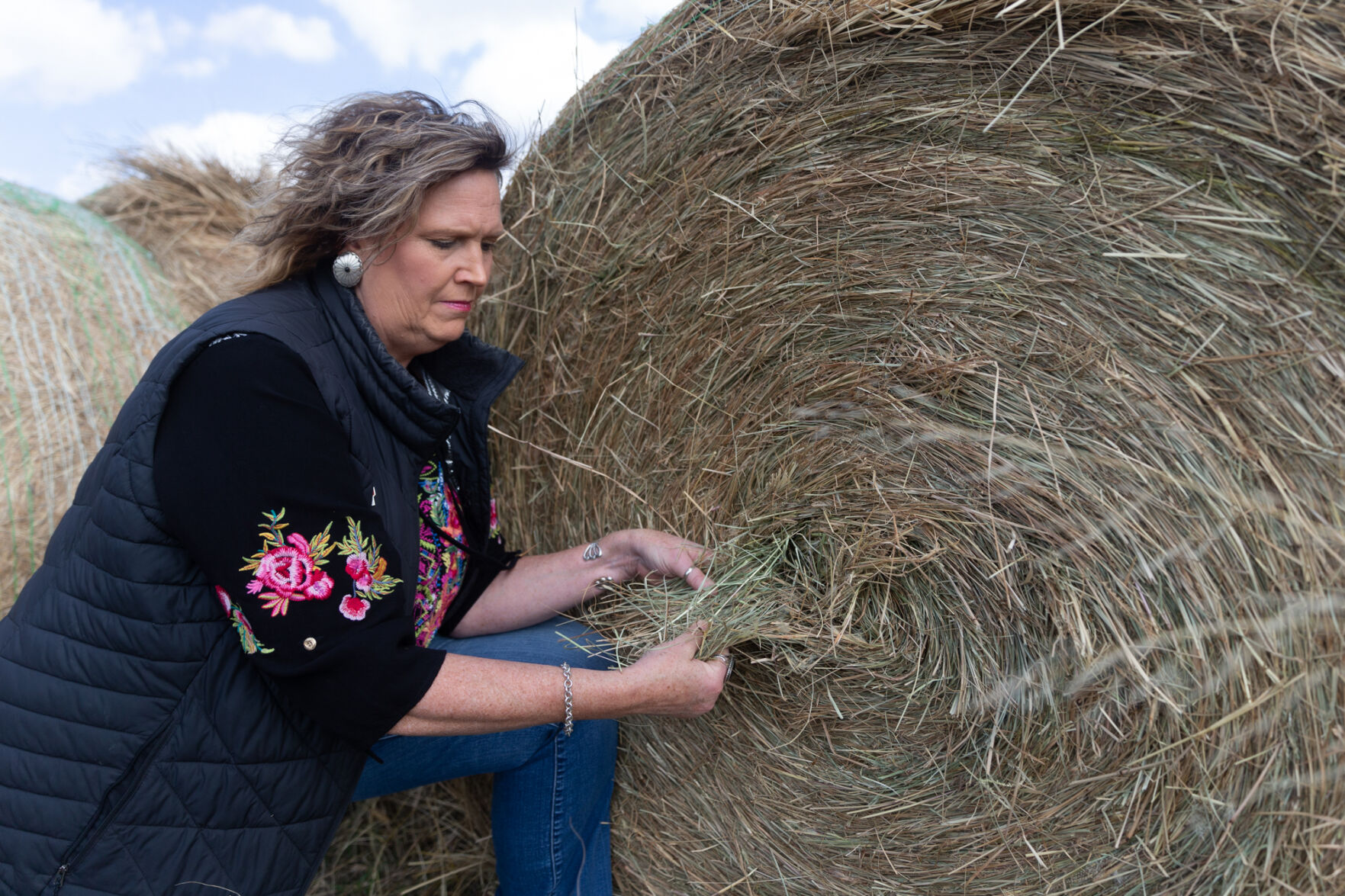
Local Cleveland County farmer Jona Kay Squires on Nov. 9.
Squires said she fears how these drought-related livestock losses affect smaller producers.
“There are quite a few (cattle operations) that are mom and pop with probably less than 100 cows on smaller acreage,” Squires said. “Especially when you look at Cleveland County, and you look at the urban communities, the land’s worth too much, and so to run livestock on it, your profit margins are a lot less.”
To help producers facing the drought, state resources, like the Oklahoma Emergency Drought Commission and the Oklahoma Conservation Commission, deployed emergency drought relief funds to farmers and ranchers. The government distributes these funds to farmers in need of assistance and provides thousands of dollars of support.
Squires said she appreciates and supports government relief funds and benefits for farmers, but more than money, she said it’s important the government supports technical training, education and research in agriculture.
“These conservation entities have a technician in every county that can come and … give you suggestions and maybe provide some supplemental money. … They give you the advice to offset expenses,” Squires said. “It helps you do the right things at the right time for the land.”
Northcutt agreed, adding that government support is essential for farmers and ranchers to stay afloat amid the drought.
Squires hopes consumers are aware of producers’ struggles, and she emphasized the importance of preserving natural land and protecting agricultural production.
“Consumers need to know, sometimes, more about what we have to go through, and what we're trying to do to bring you a healthy, safe product,” Squires said.


