
Editor's note: This story is featured in OU Daily's Best of Oklahoma guide, which is available around campus in March-April. Check out other featured stories at the bottom of this article.
In the northwest part of the state, Little Sahara State Park is a geographical anomaly.
Named for its resemblance to the North African desert, the Little Sahara dunes have been formed over thousands of years as a result of the prehistoric Cimarron River. Due to the popularity of the area, the Oklahoma Legislature purchased land from the Oklahoma State Land Commission and established the area as a state park in 1960.
The fine sand of Little Sahara has been dispersed across fields, roads and homes due to strong Oklahoma winds. In the past 70 years, U.S. Highway 281 has been relocated three times, each new road constructed 25 to 50 yards east of the previous one.
“It's the coolest place,” Oklahoma State Parks Director Sterling Zearley said. "It's hard to imagine because when you think of sand dunes, you don’t think of them being in Oklahoma, but when you’re there, it looks like you're in the middle of the desert.”
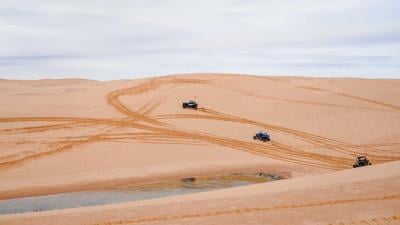
The park covers over 1,600 acres of pristine dunes, providing space for activities such as sand boarding, all-terrain vehicle riding, hiking and camping. The park also provides rental services for ATVs, making it a convenient option for first-time visitors.
“Getting to experience ATV riding is such a unique opportunity,” Zearley said.
The landscape is dotted with unique plant species that have adapted to the harsh desert environment such as sagebrush, sand plums, eastern red cedar and mixed grasses typical to a prairie. The area is also home to a variety of wildlife including lizards, snakes and birds.
“Oklahoma is so unique because you can go from mountains and fields to sand dunes within a two-hour drive,” said Zearley. “Our state parks are very unique, not only because of the activities, but the natural terrain.”
With stunning scenery and endless recreation opportunities, Little Sahara State Park gives visitors a unique understanding of the range of Oklahoma’s natural beauty.
“More people need to go and explore Oklahoma,” said Zearley. “There are so many unique opportunities, parks and areas that I would love for more people to go and visit.”
To access the dunes, visitors must pay a daily fee of $10 for drivers and passengers, but children under 10 can enter for free. Frequent visitors can purchase an annual family pass, which costs $200 for the first family member and $125 for each additional family member in the same household.
This story was edited by Shelby Emery and Emma Blakley. Grayson Blalock, Grace Rhodes, Mary Ann Livingood and Nikkie Aisha copy edited this story.


