
Last night, we posted a story that received considerable backlash.
In short: An interaction between students participating in a protest and students in opposition to the protest got heated. Police got involved. It was recorded on multiple videos.
It was a public protest in a public space. The altercation was public, too. Throughout this process, our journalists identified themselves as journalists.
I’m used to backlash. I can handle it. I don’t need anyone to be nice to me, and no one has to like me. I’m a journalist — I have thick skin. I also have a strong ethical compass, personally and journalistically. When my ethics are called into question, I feel the need to respond.
What I want to do in this post is explain The Daily’s decision and provide some context on who we are and what our role is as journalists.
Each individual named in the story was contacted by The Daily. Four of the five people named in the story had already publicly identified themselves on public social media accounts, before a reporter ever dialed their number or typed out a message. We took more than 24 hours to gather the story and deliberate over its ethical implications before publishing.
People quoted in the story and others have asked why we didn’t grant anonymity to people in the story — either the two students not part of the solidarity march, or the student activists who were involved in the story. We’re very careful about when we do and do not grant anonymity. Every time we post a story with an anonymous source, it can potentially damage our credibility — readers have no way to confirm we’re not just making things up.
Some examples of times we’d allow a source anonymity: Survivors of sexual assault or other sexual violence are always allowed anonymity. As for other instances: I allowed a source to use only her first name last week when she was concerned that using her full name and information about her immigration status might put her at risk for deportation. We’re also careful about using only first names in instances when they can be easily identified through other avenues, which hurts The Daily’s credibility and doesn’t do that person any favors, either. Anonymity can also only be granted by the editor-in-chief (that’s me).
But in this case, when the subjects are in a public space, have openly identified themselves and know they’re talking to a reporter, there was no way for us to uphold journalistic principles of fairness and truth-seeking without using their names. We quote people who speak to a crowd when they’re clearly addressing an audience at a newsworthy event. Sometimes we follow up afterward, one-on-one, and we clearly identify ourselves as journalists at the very beginning of the conversation. If someone asks to be off-the-record and a reporter agrees to that, no further conversation would be quoted. When people put themselves in the spotlight and then retroactively want out, it’s out of our hands.
In response to claims that Daily reporters secretly record phone calls — we don’t. We ask before turning on a recording device, whether it’s over the phone or in person. If you tell us you don’t want to be recorded, we don’t record. And in response to claims of deleting comments: We have an automated profanity and spam filter which automatically hides comments that use curse words or look like automated messages.
Why did we even report the argument? Had this been one of the many squabbles that occur nightly on Campus Corner, it probably wouldn’t have been a story that we would pursue. We reported this story because it occurred at a solidarity march on campus, an event we already deemed newsworthy enough to cover — we’re not covering drunken Saturday night arguments on Campus Corner on a regular basis. Police were involved and are investigating the altercation that we reported on. Stories from each of the people we talked to matched up with videos and one another’s accounts. We double- and triple- and quadruple-checked our facts.
The Daily is accused daily of being left- or right-leaning, depending on the day. My response to that: Just like this campus, we’re made up of a group of people who are left- and right-leaning, but we leave out those biases in our reporting. We don’t always agree with each other. We are made up of many identities — political, racial, ethnic, gender and sexuality identities. We could always be more diverse — we know that. We’re working on that.
The Daily is made up of bright, thoughtful people who care immensely about OU and the people who make it what it is, even when we disagree. We write about the OU community, for better or for worse. We don’t relish writing stories about when the OU community could do better, but we wouldn’t be doing our jobs if we didn’t.
We question not only others, but also ourselves, and in doing so aspire to hold ourselves to the highest ethical principles, journalistically and personally, every day.
I stand by what was published.
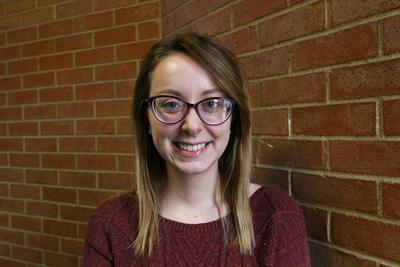
Dana Branham is a journalism junior and editor-in-chief of The Daily. Questions, comments or concerns can be directed to her via email at danabranham@ou.edu.


