Today, The Oklahoma Daily is suing OU for withholding records that we believe are public under the Oklahoma Open Records Act. We hope this lawsuit will serve as a precedent for colleges and universities where administrators are misinterpreting an important federal law which, in turn, keeps information from the public.
The Oklahoma Open Records Act was created to provide citizens access to information about the government. The act states, “ … People are vested with the inherent right to know and be fully informed about their government.”
Because OU is a public university funded in part — albeit meagerly — by the state government, many of OU’s records are open to the public. Journalists use open records as a reporting tool for stories, but anybody can request records through the OU Open Records Office.
For example, we used open records to investigate complaints about former Pride of Oklahoma director Justin Stolarik in fall 2013. Through the Open Records Office, we obtained letters about the band's leadership that members had sent to the President's Action Line. Since members were hesitant to voice their complaints to The Daily for fear of jeopardizing their positions in the band, the records provided insight into their concerns.
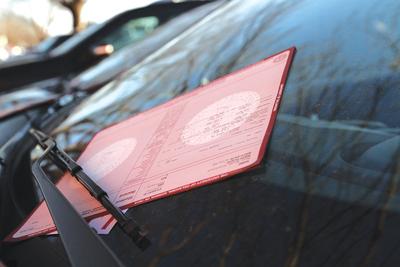
Access to records is essential for journalists to successfully keep a watch on government and public institutions, and for this reason The Daily is joining a lawsuit that was originally filed by journalism senior Joey Stipek in May 2013. Stipek, who is currently the special projects editor at The Daily, sued OU President David Boren and the director of OU’s Open Records Office when the director wouldn’t release students’ parking ticket records.
Stipek filed a request for the records in fall 2012 to investigate whether the university was granting preferential parking ticket appeals to any individuals on campus. The Open Records Office denied the request, claiming the records are protected under the Family Educational Rights and Privacy Act, or FERPA.
FERPA was established in 1974 to protect the privacy of student education records in the midst of growing abuse of student records across the nation, according to the Student Press Law Center website. The act defines “education records” as records that “directly relate” to students.
Since the law was established, universities and colleges have used it to withhold records related to students.
In 1997, the University of Maryland cited FERPA when it denied its student newspaper access to students’ parking tickets. The Maryland Court of Appeals sided with the newspaper and ruled the parking tickets were not protected under the act. A similar situation happened in 2010 when the University of North Carolina’s student newspaper was denied access to students’ parking tickets. The court sided with the newspaper, ruling the tickets were not educational records.
This lawsuit isn’t merely about finding out who is getting parking tickets — it’s about a public institution denying access to records and citing an act that does not apply.
While we don’t have a reason to believe OU has anything to hide in these parking ticket records, there is no way to know until the records are released.
Student Press Law Center executive director Frank LoMonte said in a March 2013 story parking citations aren’t educational records because visitors can get them when they come to campus. Also, he said they aren’t private records because they are publicly displayed on cars.
“A parking ticket is left stuck on the window of a car where passing pedestrians can look at it,” he said. “Would the college put your report card underneath your windshield wiper, or a copy of your transcripts?”
We believe this denial of open records exemplifies how FERPA has been used to censor information from the public.
The U.S. court system exists to interpret laws, and because of the discrepancies about whether students’ parking tickets are open records, we are turning to the courts to decide. We hope the court’s decision will set a precedent that will more clearly define FERPA and when it actually applies.


