I was incredibly disappointed in and saddened by the reaction of many in the so-called “Sooner Family” (a family that seems to only include certain types of students, I might add) when news broke about a recent bill in Student Government Association’s Student Congress. For those who may not know, someone proposed a bill that would officially congratulate OU's sports teams on their successes by telling them “boomer sooner.” There was a vote taken to potentially remove the phrase. That vote failed, so the phrase remained. The bill then failed as a whole, amid concerns that athletic teams were being given special recognition via this bill when there are so many other student groups and organizations on campus also excelling in their fields.
Indigenize OU — a group of indigenous student-activists who publicly raised the issue of the university’s mascot and chant being problematic — had nothing to do with the bill. They didn't even know it existed until people started attacking Indigenize on social media — blaming them for causing the bill to fail. Many racist and anti-indigenous comments were posted on various threads. These included suggestions that indigenous students assimilate or leave; false claims about casinos, alcohol abuse, and indigenous parents not caring about their children going to school; racist rants against Latinxs; and much, much more.
I was dismayed by the immediate visceral reaction to even taking into consideration the possibility that the university’s traditions may be harmful to some of its stakeholders. How can we claim that OU is a welcoming institution when any time marginalized students suggest significant change they are met with hate and derision?
Indigenize OU has tried for some time to help OU become less anti-indigenous and racist. Many people who claim that OU is not anti-indigenous and racist have said anti-indigenous and racist things in response, thus proving Indigenize’s original overall point (because this is about much more than a mascot and a chant: it’s about a campus climate and university system that do not truly value indigenous students, traditions, ways and experiences).
This isn’t about millennials being too sensitive or politically correct. It’s about students wanting the university to improve so that future generations can have an even better, more inclusive experience at OU. By the way, I'm a fan of substituting the words "being politically correct" with "treating other human beings with respect."
In terms of the history of traditions and how much money OU would allegedly lose by making some changes: OU has had several mascots throughout its history, so changing the mascot is not without precedent. Furthermore, OU could potentially turn a profit from rebranding as fans buy new merchandise. And even if not, perhaps losing some money by adopting a mascot that doesn't celebrate the land run, anti-indigeneity, genocide and cheating might be be the least that this institution — built on colonialism — can do.
Do I truly expect to see the mascot changed any time soon? No. Because it wouldn’t exactly be the first time in American history that money was valued more than the lives, cultures and experiences of indigenous peoples.
But let’s say things do eventually change. Then I must ask: where does your loyalty truly lie? If you would stop donating to OU because the mascot was changed, if you would stop cheering for OU sports teams because the university dropped the chant of “boomer sooner,” if you would discourage your friends/kids/whomever from attending OU because a few traditions were altered to make the university more inclusive as a whole — then to what are you being loyal? To a couple of traditions? To a football team? Or to the flagship university of the state of Oklahoma, an educational institution that shapes the minds and lives of thousands of students every year?
I, for one, love the University of Oklahoma as an educational institution that has helped me learn, grow and become a better version of myself. I will be loyal to this university (despite its problems and challenges) because of those transformative experiences — not because of a sports chant or a mascot that are rooted in oppression.
In solidarity,
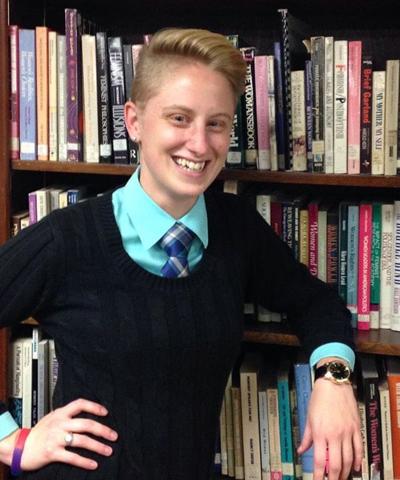
Lena Tenney
OU Graduate Student
Class of 2013 and 2016
Founding Member of Queer Inclusion on Campus (QuIC)


