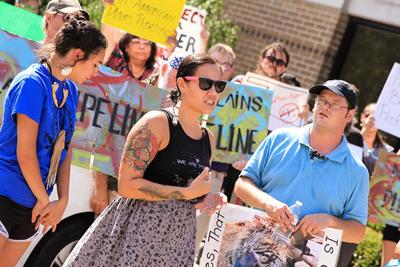

A coalition of activist groups joined at the Oklahoma Capitol Monday to announce plans to resist a new pipeline.
The activist groups, primarily from Oklahoma and Arkansas, revealed their plan Jan. 30 to combat the Plains All American Diamond Pipeline at a press conference in the Oklahoma capitol building.
The coalition consists of #NoPlainsPipeline, Bold Oklahoma, the American Indian Movement, the Oklahoma Sierra Club, Black Lives Matter and other organizations. The groups have worked together before, but are now forming a solid coalition to fight the Diamond Pipeline.
The new pipeline is a collaborative effort between Valero Energy and Plains All American Pipeline, and would run from Cushing, Oklahoma, to West Memphis, Tennessee.
The coalition will set up meetings in town halls along the pipeline’s planned route, said Ashley McCray, founder of #NoPlainsPipeline and an OU graduate student. She said the group hopes to enlist the help of water protectors from Standing Rock and chapters of Black Lives Matter from the surrounding regions. The organizers are still uncertain what those meetings will look like but hope for large turnouts, McCray said.
McCray said the coalition is opposed to the pipeline because of environmental effects and potential harm to the people living near the pipeline. The battle is life or death for those communities, McCray said.
“The people who have to live with that land and rely on those water sources will be the most impacted,” McCray said. “We know with each of these pipeline companies and projects that the people who are most directly impacted are black people, are indigenous people and are poor white farmers. This is a case of environmental racism.”
McCray said the effects of an oil spill could potentially last through generations, citing an example of pollutants being transferred to infants through their mother’s milk. Oil would also seep into the surrounding soil and be impossible to remove, McCray said.
The coalition is also motivated to protect the rights of Native American nations. There are 39 sovereign Native American nations in Oklahoma, McCray said, and the pipeline would travel through some of their lands. The Native American leaders were not contacted and did not consent to the construction of the Diamond Pipeline, so its construction is a violation of those nations' sovereignty, McCray said.
“The issue of sovereignty goes back to statehood and even further back to the development of the United States of America," said McCray, who is Absentee Shawnee and Oglala Lakota. "Once we entered this treaty relationship, this government to government relationship, we expected as indigenous people for those treaties to be honored. Every single treaty the United States has made with indigenous people, it has broken.”


