The day before their Sweet 16 game on March 22, 2002, the OU women’s basketball team was in Boise, Idaho decorating Mr. and Mrs. Potato Heads.
It was a fun, state-themed activity to take their minds off the challenging game ahead. OU had failed to advance past the Sweet 16 in its previous two seasons, with both tournament losses by double digits. Holding onto a No. 2 ranking, the highest in school history, the Sooners were determined to make it over the hump in former coach Sherri Coale’s sixth season.
Though their pregame activity was something as insignificant as playing with a toddler toy, OU was doing it as a team. That, above all else, was what the Sooners wanted — to be together.
“We fought together, and we fought as a family,” LaNeisha Caufield, a star guard on the 2001-02 team, told The Daily earlier this week. “It was a great team to be a part of because we were very uplifting to one another.”
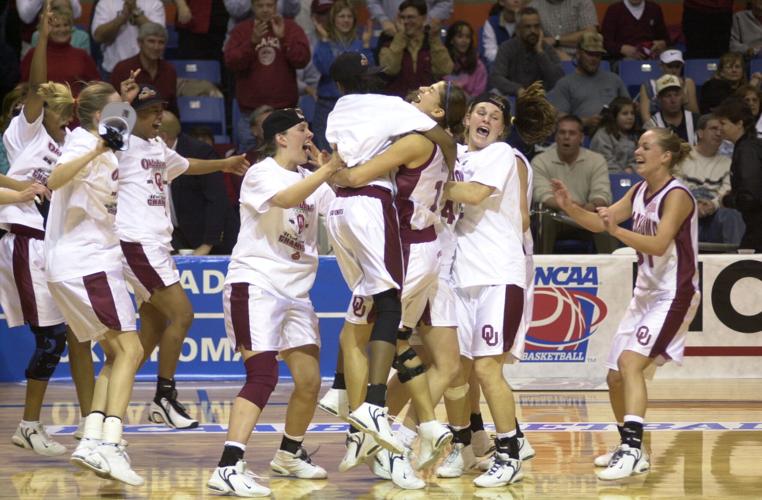
After the fun, the Sooners took care of business in Boise, defeating Big 12 foes No. 4-seeded Texas Tech and No. 3-seeded Colorado. For the first time in school history, OU advanced to the Final Four.
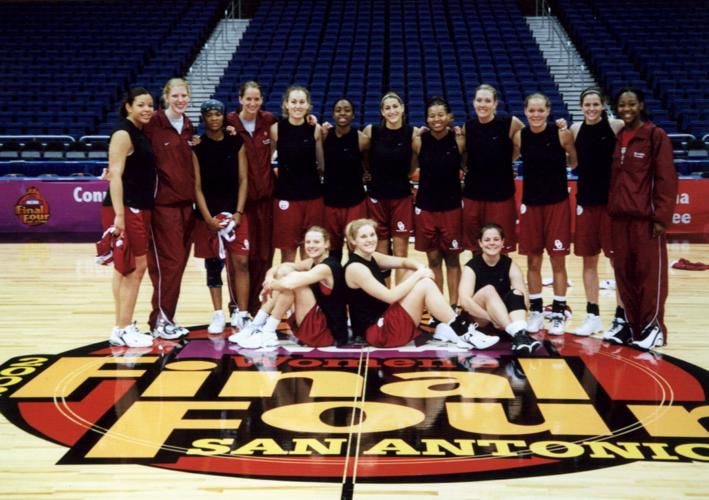
At the Alamodome in San Antonio, the Sooners defeated fellow No. 1 seed Duke before falling in its first-ever national championship appearance. It was an unfortunate ending for OU, but it didn’t take away from the season it had.
“I was proud of our team that whole season,” Caufield said. “I was a part of something that I can share with my children.”
On Saturday, 20 years later, a reunion will be held for those Sooners before No. 20 Oklahoma (21-6, 10-5 Big 12) takes on Kansas State (18-9, 8-7) in Norman. After sharing the court for countless games, Caufield and her teammates will share it once more to celebrate their accomplishments.
A ceremony honoring Coale’s career will also occur, honoring the coach who took OU to three Final Fours and won six Big 12 regular season titles in 25 seasons before retiring last April. Ahead of the reunion, players and coaches alike are looking forward to reminiscing on old times.
“It’s so enjoyable,” said Jan Ross, an assistant on the 2001-02 coaching staff who later became Coale’s chief of staff. “When you get back together, it’s like you never left. You just immediately start laughing and telling stories and catching up on each other’s lives. It’s a lot of fun.”

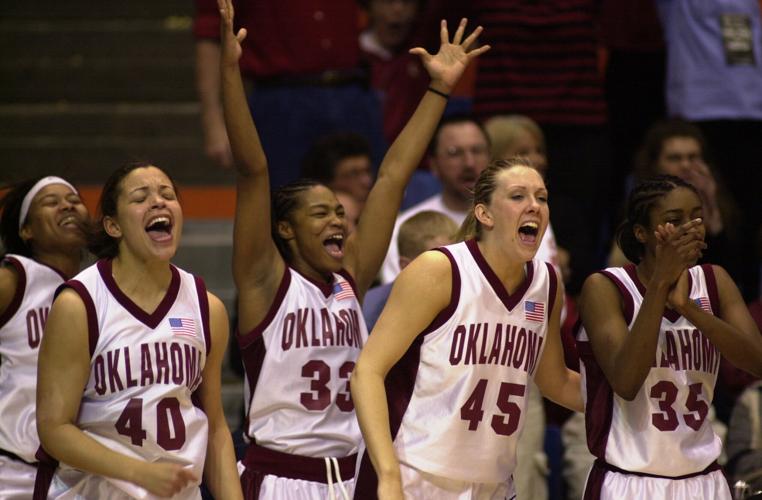
The 2001-02 OU women's basketball team celebrates amid its NCAA Tournament Final Four run.
‘They brought it every single night’
Heading into the 2001-02 season, the Sooners were hungry for more success. OU was coming off two consecutive Big 12 regular season championships and set its sights higher. The previous season, the Sooners were upset 74-60 by No. 6-seeded Washington in the Sweet 16 and were intent on not feeling that heartbreak again.
“The (2000-01 season) really left a bitter taste in our mouth,” Caufield said. “We kind of had to remember what we felt like because we didn’t want to feel like that again.”
OU came into 2001-02 ranked No. 4 nationally and immediately started winning. The Sooners lost just once in non-conference play, a nationally televised 86-72 road defeat against No. 1 UConn. OU then went 14-2 in Big 12 play, winning each game by an average of 18 points to secure a third straight conference regular season title.
To begin its postseason, Oklahoma coasted in the Big 12 Tournament. The Sooners won all three games in Kansas City by 15 or more points to become conference tournament champions for the first time in program history. At season’s end, senior guard Stacey Dales won Big 12 Player of the Year for the second straight season.
“We were able to have fun, enjoy our time together, and really get along,” said Stacy Hansmeyer, another assistant on the 2001-02 coaching staff. “This team played hard, they were gutsy, and they brought it every single night. I have the utmost respect for each one of them.”
OU entered the 2002 NCAA Tournament as a No. 1 seed for the first time in school history. The first two rounds against Hartford and Villanova were blowout wins for the Sooners, drawing crowds of over 11,200 at the Lloyd Noble Center.
After a large turnout in Norman, OU finally cleared its biggest hurdle, advancing past the Sweet 16 for the first time in school history. Results-wise, Oklahoma became the best team in program history and moved onto the Final Four after defeating the Buffaloes in the Elite Eight.
“The win that sends you to the Final Four is the one you remember the most,” Ross said. “That was special to me because we dominated the entire game. We were in the driver’s seat and controlled the game from tip-off.”
Before the national championship, Coale and Ross went to the roof of their hotel to eat their pregame meal. Under a sunny San Antonio sky, the two ate burgers, basking in their success before the most crucial game of their coaching careers.
The players were excited, too. They were nervous, but proud of what they’d already accomplished after a long season.
“It was a very memorable moment to look around and think, ‘This is how far we’ve made it,’” Caufield said. “All the hard work we’d put in from 6 a.m. workouts to mid-day practices and everything we did as a team was about to pay off."
Despite not winning its first national championship, the failure wasn't what OU was upset about most.
“We were upset because we didn’t get to play together anymore,” Ross said. “It was just a special group of young women. It's proof of what they were going to do in their lives.”
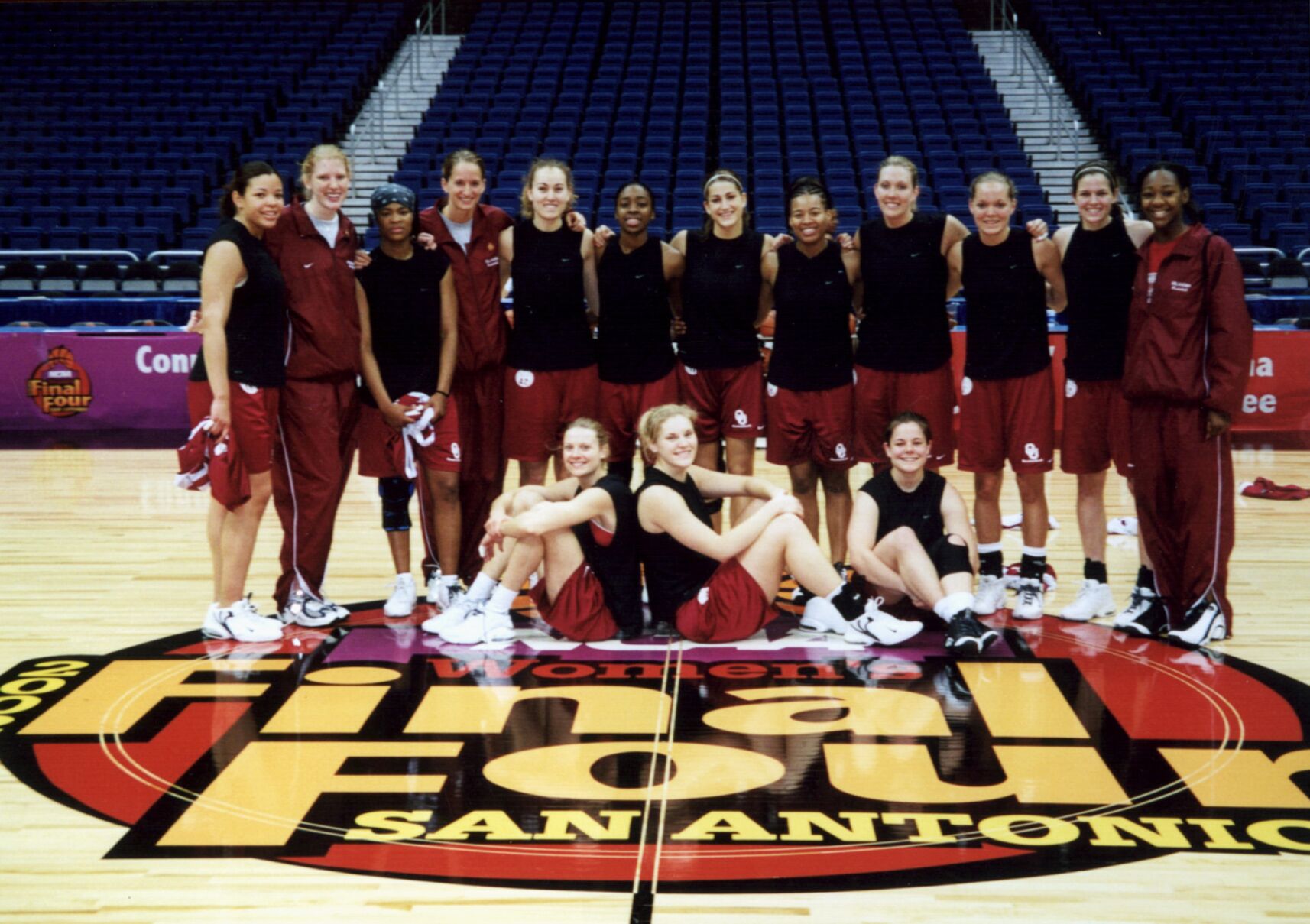
The 2001-02 OU women's basketball team celebrates its NCAA Tournament Final Four run.
‘The 2002 team was the start of an elite standard’
Four players from the 2001-02 team — Dales, Caufield, Rosalind Ross and Dionnah Jackson — became WNBA players upon leaving OU. Coale continued to enjoy success, reaching the tournament in the next 16 seasons before retiring after the 2020-21 season.
Since being hired to replace Coale, former Drake coach Jennie Baranczyk has guided Oklahoma to Coale-like success so far in the 2021-22 season. She’s won 20 games at OU faster than any coach in program history and has led the Sooners to a top-20 ranking with four top-25 wins, including a two-game sweep over No. 5 Baylor.
As the 2002 team prepares for a reunion, some see similarities between themselves and the team Baranczyk is currently leading.
“The thing that stands out is the joy they play with, just like we did,” Ross said. “They love to play hard. They don’t ever take plays off. You can tell they enjoy playing the game and being together like us.”
Coale and Baranczyk began coaching OU in similar states. Baranczyk took over a Sooners squad that missed the tournament three years in a row as Coale did. And like Coale, she is attempting to revitalize a struggling program.
Ross says it would be unfair to compare the two coaches with Coale already enshrined in the Women’s Basketball Hall of Fame, but thinks Baranczyk’s passion and energy can lead OU back to heights it reached under Coale.
“I love her energy and how she loves her players,” Ross said. You can tell she's invested in them. She's going to do whatever she can to make them successful. She lets them play free. She’s done a magnificent job.”
Saturday’s reunion will undoubtedly be an emotional moment for both players and coaches. They’ll get to relive their past success while enjoying the current success of OU now. They’ll be together again, just like they were on the court all those years ago.
When they watch, they know OU will try to live up to a championship standard — one that started with them.
“The 2002 team was the start of an elite standard at OU,” Hansmeyer said. “It set the foundation and tradition for years to come at OU. This team built it. It was the start of something special in Norman for women’s basketball, and it’s something to this day I look back on… and I’m so proud to have been a part of it.”


