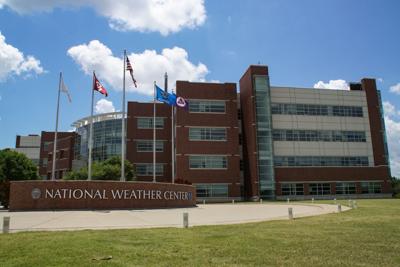

The National Oceanic and Atmospheric Administration announced this week that OU will receive an award of $208 million and be home to the new Cooperative Institute for Severe and High-Impact Weather Research and Operations.
The money will be allotted over five years for the institute’s research into observational tools, high-resolution weather models and season to season forecasts. The institute’s mission will be to transition its research into tangible tools and materials that better communicate weather information.
The new institute will continue the work of the Cooperative Institute for Mesoscale Meteorological Studies, which will dissolve Sept. 30, according to an interview with Greg McFarquhar, the director of the current cooperative institute and the soon-to-be director of the new one. Most of the Cooperative Institute for Mesoscale Meteorological Studies’ approximately 220 employees will transition to the new organization when it begins operations Oct. 1.
The new institute will focus on research collaboration with the NOAA and converting scientific findings into products, such as improved weather radar. “So ultimately, over the course of years, with those better operational products, you will see better forecasts,” McFarquhar said.
The new institute will continue fostering student research. “Approximately one third of the graduate students in the school of meteorology are supported by grants that come through (the Cooperative Institute for Mesoscale Meteorological Studies), and it will be the same with the new cooperative institute,” McFarquhar said.
The substantial grant from the NOAA will fund not only research and equipment, but also jobs. According to McFarquhar, the previous cooperative institute employed 30 to 40 undergraduate students in lead positions.
McFarquhar said he anticipates that the new institute and the NOAA grant will provide even more employment opportunities for meteorology researchers and students. “Probably we’ll see a gradual increase in the numbers (of employees) over the course of time because the funding is going up. The amount of research we’ve been doing has been going up five to ten percent a year,” McFarquhar said.
“It’s a really exciting opportunity,” McFarquhar said. “It allows us really to take advantage of some of our uniquely qualified people at OU, to be able to conduct research to solve problems of mutual interest to the NOAA, and that will improve our basic understanding of weather, and ultimately help produce better forecast warnings that will save lives and property.”


