

Derek Fuller remembers being at his mom’s clinic after school, seeing her interact with her patients before she’d drive him to his sporting activities in the evenings.
Fuller’s mom, Frances Boulden, worked as a nurse, and he said all her patients loved her because she genuinely cared for them. Paired with his dad, Lawrence Fuller, who was a U.S. Marine, Fuller said his parents modeled serving others.
“That showed me … that work ethic of getting up every day, going out, making a difference and always in the service of others,” Fuller said.

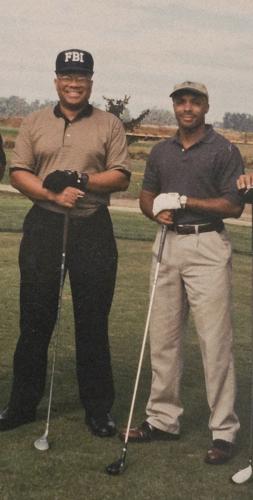
OU Police Department Chief Derek Fuller and his father, Master Gunnery Sergeant Lawrence Fuller, in 2004.
Fuller, a military child, spent most of his childhood in the Washington, D.C., area. After graduating from the Naval Academy in 1989 and serving as a naval flight officer for five years, he wanted to leave the military but didn’t want to stop serving his country.
One of his mom’s patients, an FBI agent, encouraged Fuller to consider joining the bureau. That agent was unit chief of the FBI National Academy in Quantico, West Virginia, and gave Fuller and his mom a tour of the training facility near the end of Fuller’s active-duty obligation. Fuller applied to the FBI and became a special agent in 1995.
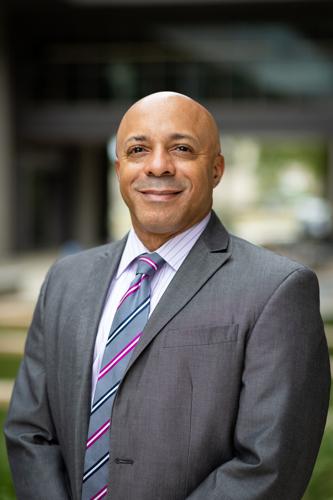
After 25 years in the FBI, Fuller joined OU Police Department in October as chief of police and associate vice president, with hopes to further unify OU’s campuses and engage with its community.
‘What we do matters’
Before joining the FBI, Fuller served as a police officer for the Santa Rosa Police Department in California. After a year, he joined the FBI and later served as the chief of the bureau’s police department in Washington, D.C., for five years. In 2013, he was promoted to assistant special agent-in-charge in New Mexico, where he oversaw federal operations across the state.
In 2020, Fuller moved to San Antonio to serve as the chief of public safety for the Alamo Colleges District, a Baldridge Award-winning community college system.
Fuller met former OUPD Chief Nate Tarver on assignment with the FBI in 2018 to audit the Oklahoma City FBI office. He was tasked with interviewing partner agencies including OU’s department, where he learned about Tarver and the university. Following Tarver’s retirement, as Fuller applied for the position, he said he wanted to continue in higher education policing and loved OU’s campus and leadership.
Now in Norman, Fuller said he’s fortunate Tarver left him with a great department, but he is seeking ways to further improve it.
“We're a flagship university,” Fuller said. “We have outstanding people who work here. What we do matters and is important. There's no reason that we should not be the flagship destination for police coming out of the academy or coming to Oklahoma looking for a place that they want to call home.”
According to Fuller, OUPD officers and staff discussed what it means to them to be a part of the department and revised its mission, vision and core values statements to unify all three campuses. The new core values acronym is called “PILLAR,” which stands for professionalism, integrity, leadership, loyalty, accountability and respect.
Fuller said PILLAR aligns with OU President Joseph Harroz Jr.’s “Lead On, University” strategic plan, OU’s eight-year plan composed of five pillars that represent goals set by the university. By creating uniform policies and procedures, Fuller said the department can ensure people receive the same police response at every OU campus.

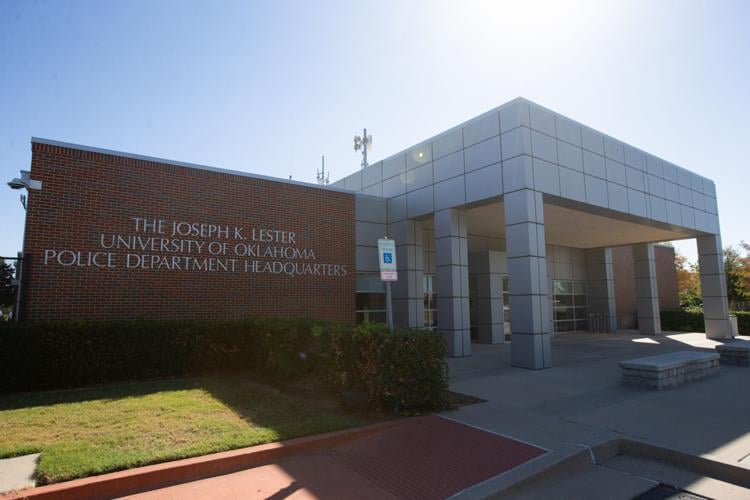
The Joseph K. Hester University of Oklahoma police department headquarters on Oct. 19, 2022.
The department will plan its goals for next year in accordance with PILLAR, Fuller said. He said he hopes to improve the department’s accountability and transparency by hosting outreach events with students, faculty and staff.
Fuller also said he wants to maximize social media communication to protect people. He plans to increase the department’s social media presence and highlight his officers’ personal interests, like volunteering, coaching and mentoring, so the community can get to know them.
“That's one of the big goals that we have,” Fuller said. “How can we be more forward facing, using that technology to get that information out there?”
‘Treat people with respect’
Fuller said his experience overseeing multiple locations prepared him to lead OU’s three campuses. As chief of all FBI police in Washington, D.C., Fuller was in charge of four locations, including in New York and Quantico. As chief of the Alamo Colleges District, he managed five community college campuses. Fuller said in Washington and Texas he worked in leadership development and empowered leaders to handle situations while he was away.

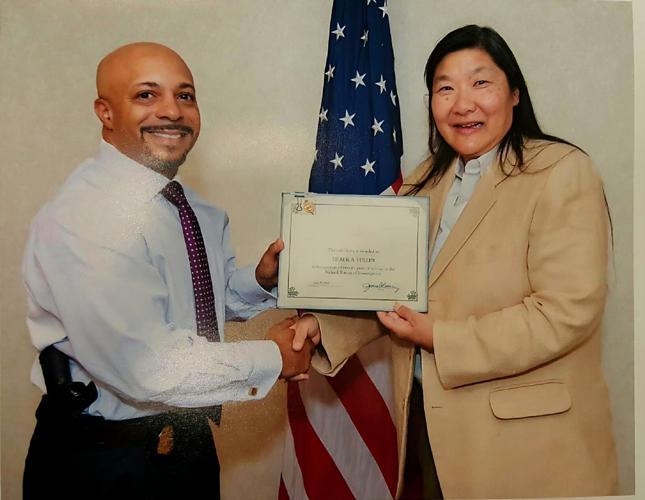
OU Police Department Chief Derek Fuller with mentor and agent in charge of the FBI Albuquerque field office, Carol Lee, in 2015.
The best skill a leader can have is listening, Fuller said. He explained that listening helps leaders determine what the problems are so they can handle them, citing negotiation tactics. Adopting this strategy, Fuller said he has been meeting with staff and officers in the past month, and plans to meet with students and faculty next.
“To meet with them and listen and find out ‘What has been your relationship so far with the police?’” Fuller said. “‘What would you like us to do better? What things have we not thought about?’”
Fuller worked undercover in London for Scotland Yard, spending a year infiltrating a criminal organization bringing weapons into England. Fuller and a fellow undercover agent passed on information they discovered to Scotland Yard, and the authorities were later able to successfully prosecute the criminals.
Going undercover showed Fuller what it looked like to be on the other side of policing, as someone the authorities believed to be a criminal. He said it was eye-opening, and taught him that respecting all people is part of doing his job well.
“We have to treat people with respect if we want to have any type of impact whatsoever,” he said. “That's very important. Even when we're talking about dealing with our criminals, we have to treat people with respect.”
After 2020, with the death of George Floyd and protests sparking nationwide, Fuller said he wanted to see trust and respect restored to police. Departments must be active in the community and communicate both their mistakes and what they’re doing to fix them, he said.
That year motivated Fuller to continue his career in law enforcement, he said, because he recognized that there was work to do to improve. He said they’ve made a lot of progress since, implementing officer intervention and having departments take responsibility for their mistakes, but there’s still more to do.
“We really do have to have to be engaged,” Fuller said. “We really do have to listen and serve — listen to what the community we serve wants. I think that goes a long way towards building that trust back.”
‘Changing people’s lives’
Fuller said his mom went back to school for her degree as an adult, which taught him that no matter how old someone is, they can continue to learn and make a difference. He’s learned from impactful mentors who shaped his career by teaching him to lead and do his job well, he said.
“You can have leaders who are not necessarily above you, but in them, you see things that you know are very impactful to you as a leader,” Fuller said.
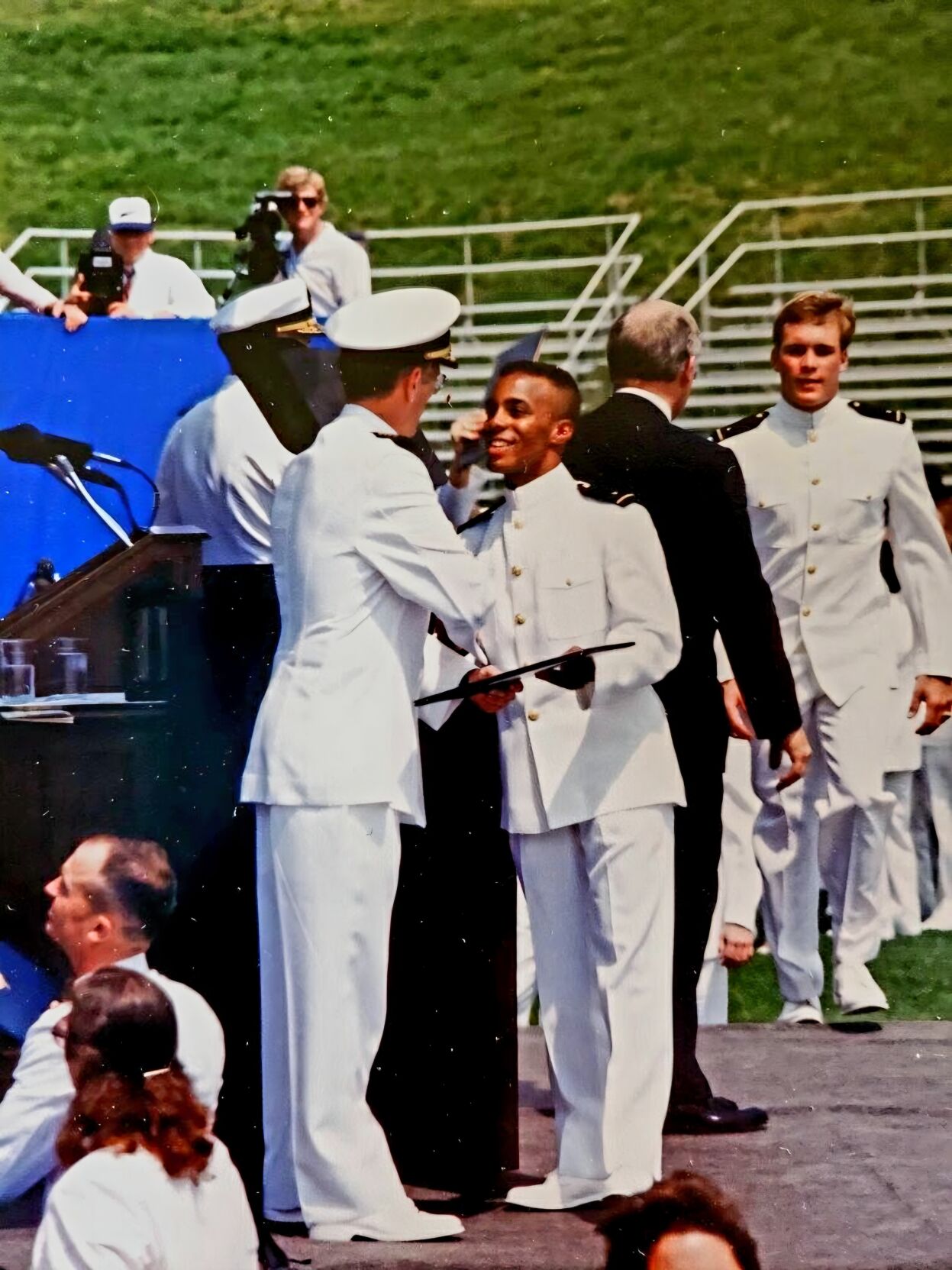
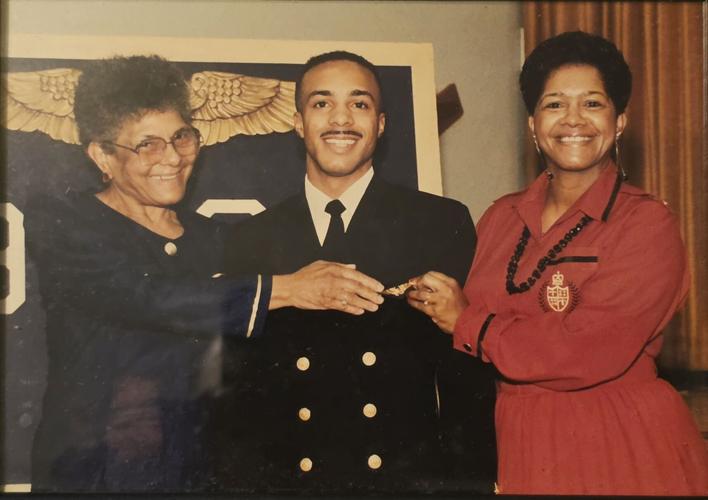
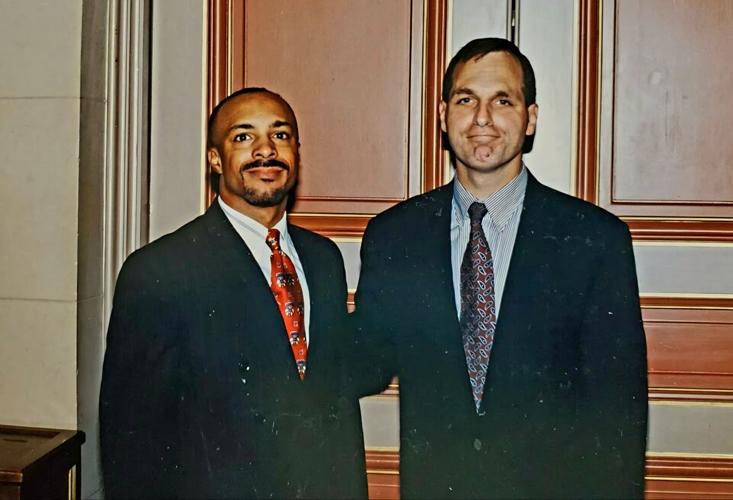
Derek Fuller throughout the years
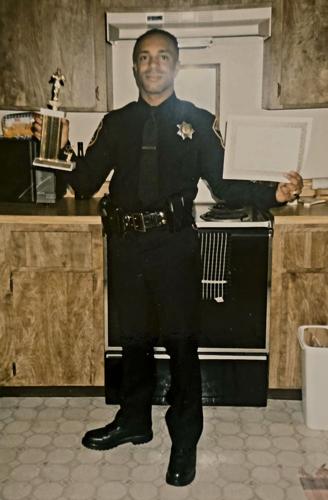
OUPD Chief Derek Fuller holding his Class Physical Fitness Award on the day of his police officer graduation in 1994.
Dallas Chief of Police Daniel Comeaux met Fuller in California in 1998, when they worked together on a joint task force. Though they were in different departments, Fuller said Comeaux was a mentor, and Comeaux said Fuller opened doors for him to collaborate with teammates.
Comeaux said Fuller excels in communicating and having strong working relationships with others. On the task force in California, Fuller wasn’t a supervisor, but became an unofficial leader because he was the “go-to agent,” Comeaux said. Fuller’s experience with every level of law enforcement — local, federal, university — will be an asset to OU, Comeaux said.
“The university is getting someone that has a diverse background in law enforcement, that's covered every area of law enforcement, and now has reached the highest level of law enforcement as far as being the chief of a major college,” Comeaux said.
Bill Hall, now a New Mexico state legislator, met Fuller in 2013 in New Mexico when Fuller took over as the assistant special agent-in-charge. Though Hall worked for him, Fuller said he considers him a mentor because of how Hall taught him about dealing with Native American crime violations and building relationships in New Mexico.
Hall said Fuller listens intently and is willing to take input from others, a valuable trait not found in other leaders, and he’s a capable decision-maker. When Fuller arrived in New Mexico, he didn’t take their operations or high-profile cases over by force, but instead, offered agents and staff support as they did their jobs.
“He's a good leader, because he's just not one to take credit for something he didn't do,” Hall said.
Fuller said he saw the way his mom made her patients feel cared for, and he said he strives to emulate that as he meets people. Officers can have a positive impact, from saying a simple hello or saving lives — it’s a satisfaction he said people can’t find anywhere else.
“What we do on a daily basis isn’t based on the arrest we make or the tickets we give, but it's the contacts, it's the discussions,” Fuller said. “It’s how you can have an effect in changing people's lives on a daily basis.”
This story was edited by Anusha Fathepure, Ana Barboza, Natalie Armour and Thomas Pablo. Kennedy Johnson, Sophie Hemker and Mary Ann Livingood copy edited this story.


