
As OU’s Muslim students celebrate Ramadan, they said the difficulties of the already laborious holy month are exacerbated by limited meal options offered on campus.
When a Muslim breaks their fast at dawn or sunset, they consume halal foods that many U.S. college campuses serve in short supply. These options have become further strained by the pandemic and hours at which observing students can have meals.
Halal foods adhere to the teachings of the Quran, with various Muslims practicing varying levels of observance. According to the Islamic Council of Victoria, halal meat must be slaughtered by a sane Muslim adult in a manner that limits the suffering of the animal while also reciting a dedication. The method in which the meat is prepared for consumption is also important, as it cannot come into contact with any non-halal foods.
Abdallah Al Balushi, an environmental engineering junior from Oman, said the cafeteria has one section where they serve Greek food that is halal. Some places, such as Xcetera, occasionally sell halal turkey sandwiches, while other locations, such as the Union, offer vegetarian options that Muslim students can consume.
According to the OU Housing and Food website, halal options include certain ingredients at the cafeteria’s La Roma and Sooner Smokehouse, and all meats are certified halal at the Athens eatery, Xcetera and Cate Center restaurants. The Union and the Flying Cow Café offer halal turkey sandwiches, and The Flying Cow Café also offers halal chicken with prior notice.
Fizza Sattar, the vice president of the Muslim Student Association and a psychology and public health junior, said she knows multiple Muslim students on campus who decided to go completely vegetarian due to the lack of food options, which came with consequences.
“It essentially is a food insecurity issue because students have grown up eating these things all their lives and then suddenly, (when) they get to college, they don't have options, they go fully vegetarian and they're not getting the nutrients they need there,” Sattar said.
Students’ mental and physical health has been affected by their diets, causing difficulties in and out of the classroom, Sattar said.
Halal food served by the cafeteria often runs out, forcing Muslim students to search for other options, Balushi said.
Balushi said, in early April, there was an instance where the cafeteria ran out of halal beef. This shortage continued for almost a week.
Abdifatah Mohamoud, a chemical engineering junior, said he wishes the university would ensure halal food in the cafeteria did not run out during Islamic holidays, such as Ramadan.
“I personally had halal food run out while fasting, and it’s hard to break your fast with just salads,” Mohamoud said.
According to Learn Religions, “breaking fast” is the period of Ramadan where Muslims are permitted to eat after sunset, called iftar. This is a meal typically shared with family and friends.
“Each year during Ramadan, we work to offer students to-go Halal meal options that can be taken from our dining locations for their meal during their non-fasting time,” Amy Buchanan, director of marketing and communications, wrote in an email to The Daily.
Mohamoud said COVID-19 has caused a lack of diversity in meals, with the same options of hotdogs and other small items, which ran out quickly.

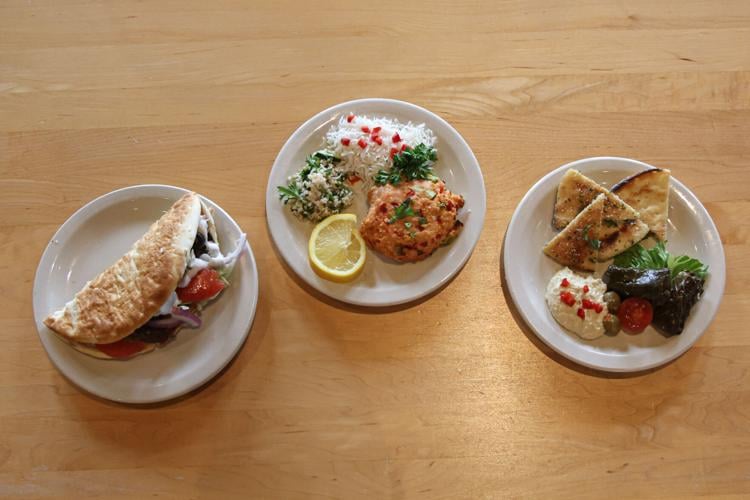
Three plates of Halal food in Couch Cafeteria on April 16.
Many Muslim students seek outside sources of food because eating the same meals becomes repetitive, Balushi said. Some restaurants in Norman serve halal food, but like on campus, these options have become limited due to COVID-19, he said.
“There's also some options outside, like (on) Campus Corner there's about two to three restaurants that serve (halal food),” Balushi said. “The problem is, they're expensive because maintaining the halal food by itself (and) the meat is expensive, so they have to (raise the price) so they can get the benefit they need.”
Balushi, who works as a resident advisor at Adams Tower, said Muslim students with jobs sometimes spend the majority of their earnings on food off campus.
Sattar said international Muslim students often cannot drive to off-campus locations to buy halal ingredients or meals. With COVID-19, this has become even more difficult, she said.
“We're trying to work with Student Life for Ramadan this year trying to get a bus to go to OKC and take them to get their halal food,” Sattar said. “But that's not something we can do on a regular basis throughout the school year, and so it really is a really big issue for them especially.”
Many Muslim students have devised creative methods to obtain halal ingredients or meals, Balushi said. He said he and his friends combine their finances and order from companies that provide large quantities of halal meat to restaurants and distribute the food among themselves for cooking.
Sattar said providing food for Muslim Student Association meetings is also difficult, as options such as the Union’s catering services are difficult to negotiate with for accommodations. She said halal-specific orders must be placed with a two-month advance, and the price is expensive.
“We don't even know what events we’re having two months out. There's no way for us to plan that out and how many people (will attend) and all of that,” Sattar said. “So that's been a huge barrier for us to be able to provide ... food for even our own members at our meetings.”
Sattar said they “tried talking to the Union” about the situation without success. Because of this, MSA meetings are now held in other locations instead of the Union, such as Wagner Hall.
According to a 2010 all-comprehensive survey conducted by the Islamic Food and Nutrition Council of America, IFANCA, 77 percent of responses collected from 135 college campuses through Muslim student associations indicated that there were no halal options served on their campus. Twelve percent of campuses offered partial halal options, with many students reporting they either followed a vegetarian diet or cooked in their dorms or off campus.
The Muslim Student Association is working with IFANCA and Student Life to develop a survey for Muslim students on OU’s campus to collect data to present to OU’s administration, Sattar said. She said she hopes it will illustrate to administrators that there is a real issue.
“I'm hoping that the survey will show that, yes, there are currently halal options, but they're not enough for the kids that are here,” Sattar said.
New York University opened the first all-halal university dining hall in 2019, a decision that Satter said would be “awesome” as a long-term goal at OU, but unlikely.
“I think what we're really going for right now is just having some kind of labeling system, or some kind of (extra) station for kids to have more access to the food,” Sattar said.


