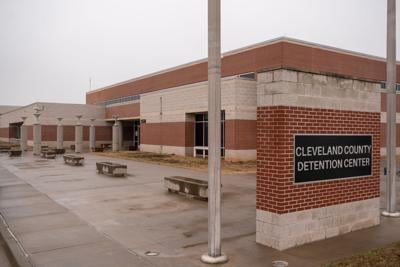

Oklahoma City Council approved an amended six-month agreement Tuesday, allowing Oklahoma City to house inmates at the Cleveland County Detention Center, The Oklahoman reported.
Jason Ferbrache, assistant city manager for Oklahoma City, told OU Daily Wednesday that due to staffing challenges and the city not operating the Oklahoma County Detention Center, Oklahoma City wanted more housing options for detainees arrested on municipal charges.
“Our goal with entering into an agreement with Cleveland County is to give us more options. … It will allow our officers to process those detainees faster,” Ferbrache said. “If there’s opportunities for the city to take some burden off of Oklahoma County, we want to be good partners to do that.”
The approval follows the Cleveland County Commissioners’ amendments earlier this month. Commissioners approved the agreement 2-1, which was originally presented to the board in March, with District 2 County Commissioner Jacob McHughes voting against it.
Oklahoma City Police Sergeant Dillon Quirk wrote in a statement to OU Daily the arrangement was practical and strategic because about 125 square miles of Oklahoma City is located within Cleveland County rather than Oklahoma County.
“By expanding its detention capacity through this partnership,” Quirk wrote. “The department is better positioned to meet current and future demands.”
The Oklahoma County jail can hold up to 2,890 inmates. In December, the jail held 1,454 total inmates, according to The Oklahoman.
Cleveland County Sheriff Chris Amason confirmed to OU Daily earlier this month that the Cleveland County Detention Center has a capacity of about 580 inmates. At the time, the center was housing about 490 inmates. Jeremy Walker, director of communications for Cleveland County Sheriff’s Office, wrote in an email to OU Daily Wednesday that the center is currently housing 468 inmates.
Ferbrache said under the agreement the city will pay less to house detainees in Cleveland County than it currently does in Oklahoma County.
“The cost per day for those detainees is less at Cleveland County,” Ferbrache said. “(The facilities) have their own operating budgets, their own expenses. They determine what they’re going to charge municipalities to contract with them.”
Ferbrache said the Oklahoma City Police Department will oversee processing inmates into Cleveland County Detention Center. He added that funding for the agreement comes from the Oklahoma City Municipal Facilities Authority.
The authority will pay $68 a day for each inmate housed in Cleveland County, according to the agreement. The authority initially projected an annual payment of roughly $24,000 to Cleveland County.
Melissa Smuzynski, Cleveland County director of communications, told OU Daily Wednesday the finalized agreement states there is an expected annual payment of about $12,000. She said the authority will also cover any additional medical costs, including transportation and hospital watch if emergency medical attention is necessary for a detainee, according to the agreement.
“I know (Amason) was looking at this as a way to potentially bring in more revenue or generate more revenue for his department and for the jail itself,” Smuzynski said. “The commissioners wanted to make sure there wasn’t a greater cost to the community as a whole.”
Smuzynski said the commissioners limited the term agreement from one year to six months due to its potential effect on the community.
“(The commissioners) wanted to make sure that the deal was beneficial for Cleveland County and its residents,” Smuzynski said. “With the ability to reevaluate in six months, they can look at a much shorter timespan and see if this had any type of strain on community resources and services like the Norman Police Department or hospital system.”
The agreement goes into effect retroactively, starting July 1 and lasting until Jan. 1, 2026.
District 3 County Commissioner Rusty Grissom, who first proposed the amendments, wrote in an email to OU Daily Wednesday that he hopes the agreement will benefit both parties.
“I’m hopeful that the contract will be beneficial to both Cleveland County and Oklahoma City,” Grissom wrote. “We will evaluate the benefits and any potential burdens in six months.”
In addition to limiting the agreement’s terms, commissioners amended the contract to state only detainees arrested in parts of Oklahoma City within Cleveland County boundaries can be housed at the detention center.
Norman Mayor Stephen Tyler Holman spoke to the Daily in early August about concerns raised by Cleveland County commissioners and residents regarding Oklahoma City detainees’ transportation after release from the Cleveland County Detention Center.
“Are (inmates) going to be released into Norman to fend for themselves as far as getting back home goes?” Holman questioned.
Smuzynski said the amendment should alleviate transportation concerns.
“By accepting only detainees that are picked up or arrested within Cleveland County, you’re eliminating the issue of transportation being a problem for those detainees,” Smuzynski said.
Despite the amendment, Holman told the Daily Wednesday that NPD will evaluate how the transportation aspect of the agreement is functioning.
“(NPD) is going to keep track of interactions they have with people that are coming from the county jail,” Holman said. “If they are people that are being arrested by OKCPD and then they’re ending up staying in Norman for some reason, then we want to know if that is going to be an issue or not. We’ll see how it goes.”
This story was edited by Ana Barboza, Natalie Armour and Thomas Pablo. Anusha Fathepure and Mary Ann Livingood copy edited this story.


