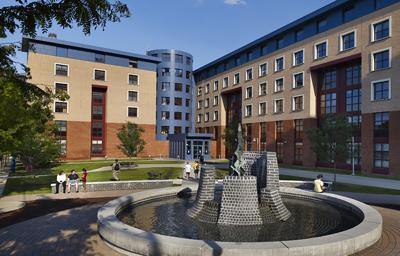
President David Boren recently shared his aspirations for the newly-announced residential colleges, saying that he hopes it will create stronger bonds among students while taking the University out of the commuting category.
The proposed housing facilities plan to accommodate approximately 600 students in different room configurations. On-site dining, faculty housing, student lounges and studying rooms will provide upperclassman undergraduates the opportunity to create communities that focus heavily on learning and academic growth. At least three residential colleges could follow, if demand for rooms meets expectations.
“We did a market study, and we think something like 8,000 students would like to move back on campus after they’re freshmen — if they had the option, but they don’t have the option now,” Boren said.
He firmly believes these additions will help bring leadership back to campus by keeping more upperclassmen on campus, rather than having them commute back and forth every day.
“I think it will especially bring a lot of student leaders back on campus, many of whom are participating in activities that are 20 hours a day and don’t want to have to commute off somewhere and then come back,” Boren said. “And it just builds really closer bonds among people who are housed together for a longer period of time.”
The residential college plans use a concept based on college housing at Oxford University and Cambridge University, which has benefited other universities in the United States.
The residences will have their own dining halls, catering to 300 to 350 students in each one.
The residential colleges will have their own sports teams, crests, mottos and faculty fellows. Faculty fellows will have offices in the residential colleges so they can mix and mingle with students. There are also plans for an additional parking garage to be built behind the residential colleges, all the way up Jenkins toward Huston Huffman.


