
Oklahoma has long felt the effects of a nursing staff shortage in hospitals and nursing homes.
Before the outbreak of COVID-19, nursing residents ranked at the top of Oklahoma Works’ critical occupations list, marking the job as one needing shoes to fill.
Julie Hoff, dean of the Fran and Earl Ziegler OU College of Nursing, told OU Daily that there are many complex reasons why the nursing shortage has affected the state for over 20 years.
“There's been a nursing shortage my whole career,” Hoff said. “It's like we're playing catch-up all the time. Then you've got the impact of COVID, and then you've got the impact of more opportunities for nurses. It's not a single linear problem. It’s multi-cause for multiple reasons, good and bad.”
According to the Oklahoma Nurses Association, there are 712 nurses per 100,000 Oklahoma residents, ranking the state 46th in the nation in terms of nurses per capita.
Additionally, Hoff said the nature of a nurse’s job is both difficult and rewarding, as nurses often work in complex, high-stakes environments depending on their vigilance and expertise.
“Regardless of how good or bad staffing is, if a patient needs care, we're obligated to provide care,” Hoff wrote in an email to OU Daily. “With the different shortages of environmental services, dietary, and nursing assistant personnel, the work of nurses increases given that nursing is responsible for patient care 24/7.”
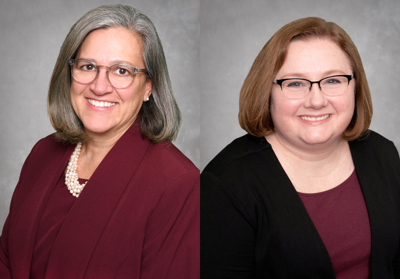
Stefanie Beavers, OU Health’s inaugural chief nurse executive, said though the nursing shortage comes from many different issues, the aftermath and impact of the pandemic are still felt in hospitals across Oklahoma.
Much of the problem now, Beavers said, is many nurses working in hospitals are not as tenured or experienced as in years past, since many in the workforce left the profession following COVID-19 or due to burnout.
“We're seeing pretty significant shortages, and it's not unique to Oklahoma or OU health,” Beavers said. “It's something that we're seeing industry-wide that the hospital setting is failing at pretty significantly.”
In a hospital setting, Beavers said a nurse acts as the primary caregiver and is responsible for every aspect of patient care management. The job requires critical thinking and time management skills since nurses are required to care for their patients by administering medication and helping them to meet other physical needs.
The average full-time nurse works approximately five 8-hour shifts, four 10-hour shifts or three 12-hour shifts per week. However, according to a study investigating the relationship between hospital nurses’ shift length and the resulting outcomes, nurses consistently work shifts as long as 12 hours or more.
“Nurses are the oxygen of the health care system,” Hoff said. “You need so many of them to keep health care functioning.”
Kathryn Konrad, director of the Bachelor of Science in nursing program at the OU College of Nursing, said nursing students face several challenges, including stress and burnout when preparing to go into their designated workforce.
“We help students with study skills,” Konrad said. "We help students with coping mechanisms and those are all things that we're trying to engage in more because we know that the more we're better at taking care of our own stress, the better we are at helping others with their difficulties as well."
According to the nursing shift study, nursing burnout was measured using the nine-item emotional exhaustion subscale of the Maslach Burnout Inventory, an instrument used to assess burnout in human service professions. Nurses working shifts longer than 8-9 hours were found to have a higher score, indicating high emotional exhaustion.
Health workers face challenging work conditions and suffer high rates of poor mental health outcomes, according to a 2022 survey by the CDC. The Centers for Disease Control and Prevention also reported 79 percent of physicians claimed to have experienced burnout starting before COVID-19.
In November 2021, another survey found 32 percent of registered nurses said they were likely to leave their position, up 10 percent from those surveyed in February 2021. The survey found reasons for wanting to leave included insufficient staffing levels, seeking higher pay, not feeling listened to or supported at work and the emotional toll of the job.
Konrad said financial burdens can also weigh on students. However, she said OU offers several scholarships and locations so students can not only pay for school, but also so they can stay near the local communities they might want to serve.
OU Health has facilities in Tulsa, Norman, Oklahoma City, Edmond and Yukon. Konrad said OU Health also has opportunities for students to work in Lawton and at Duncan Regional Hospital.
“There’s a lot of different barriers for people to come to school and that's one of the reasons why we have spaces all over the state,” Konrad said. “No matter where you are, we try to be there so you can be there (to) get your nursing degree in your own community (and) become part of that community to address the needs of a rural state.”
Hoff said the nursing shortage was much like how shortages in teaching staff affect schools, akin to the ongoing teacher shortage in Oklahoma. A typical salary for an Oklahoma teacher ranges from $36,601-54,395, depending on experience and degree level, according to the Oklahoma State Department of Education. According to the National Education Association, Oklahoma ranks 34th in the nation in average teacher salary.
Registered nurses in Oklahoma earn an average of $68,180 per year, 17 percent lower than the national average of $82,750 per year, according to Incredible Health. This ranks Oklahoma 41st among all other states.
While students are in school, Hoff said she teaches the power and value they have in what they do.
“You want them to know their value and know what their options are,” Hoff wrote. “The (nurse) can provide direct care or apply their knowledge and skills in other businesses such as insurance, pharmaceutical, and informatics.”
Graduates with a Bachelor of Science in nursing can be bedside nurses in medical settings, like hospitals, clinics and physician's offices or work as educators, health policy nurses, nurse recruiters, nurse informatics specialist, forensic nurses, clinical research nurses or nurse health coaches.
As dean, Hoff said she tries to impact the nursing shortage in Oklahoma by making programs to increase the workforce, building academic programs that align with health system needs and working to impact policies affecting nursing.
On Feb. 8, OU announced a partnership with the University of Science and Arts of Oklahoma and Murray State College to offer guaranteed admission to six qualified undergraduate nursing students so they can pursue their nursing degree at OU College of Nursing’s locations in Lawton, Duncan or its online program.
One of the most important things to teach students, Konrad said, is how to handle real-world situations since they will have to care for patients immediately out of school.
Since the pandemic, Konrad said teaching online simulations and using programs like telehealth have been implemented in the nursing programs, which not only benefit students' knowledge, but also help reach more people across the state.
“We all get a chance to work together when we're in an online environment,” Konrad said.
Beavers said OU Health’s partnership with the OU College of Nursing creates a direct pipeline for students, which is helping to build the workforce and give students the necessary experience in the nursing world.
Though nursing is a demanding career, Beavers said the value of the job makes it all worth it in the end.
“Never lose sight that you have the most amazing opportunity and privilege to take care of another human being and their family or loved ones in their most vulnerable moments,” Beavers said. “There is something so special about that and being able to provide high-quality care and outcomes to our community that is truly in need of our service.”
This story was edited by Alexia Aston, Karoline Leonard and Jazz Wolfe. Francisco Gutierrez and Alexandra Powell-Lorentzatos copy edited this story.


